

Tarot Cultures
Exhibition and Meet the Deck Online Catalogue
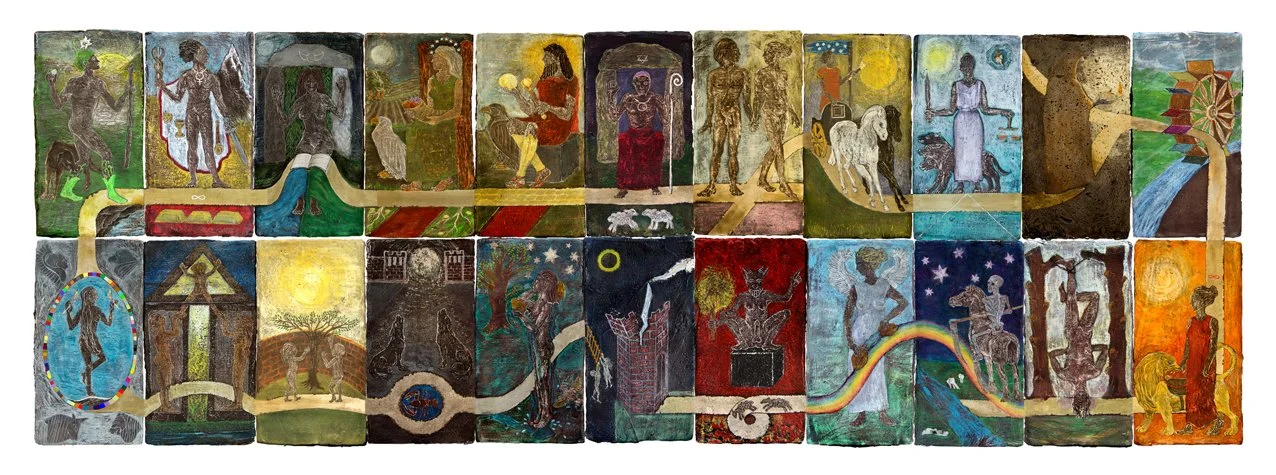
Major Arcana Tarot Droga (2011) (c) Barbara Marzena Mirewicz-Czumaczenko
Barbara Marzena Mirewicz-Czumaczenko, Major Arcana Tarot Droga (2011)
Print on waterproof material
Tarot Droga [The Road Tarot] was first published in 2011. This was preceded by several years of work on the images. Mirewicz-Czumaczenko engraved and painted images of previously prepared designs of the Major Arcana and court cards on handmade ceramic boards. The remaining card elements were created using the same technique, photographed, and used as elements in the composition of the cards. The photographs of the images, signs, symbols, and typography were then assembled in a graphics program. The distinguishing feature of the deck is the image of the path that the Fool enters, which extends through all the Major Arcana cards, concluding its cycle with the World card containing the egg, which opens again. Tarot Droga was recognized by Taschen Publishing, and ‘The Death Card’ was published in Tarot: The Library of Esoterica (2020).
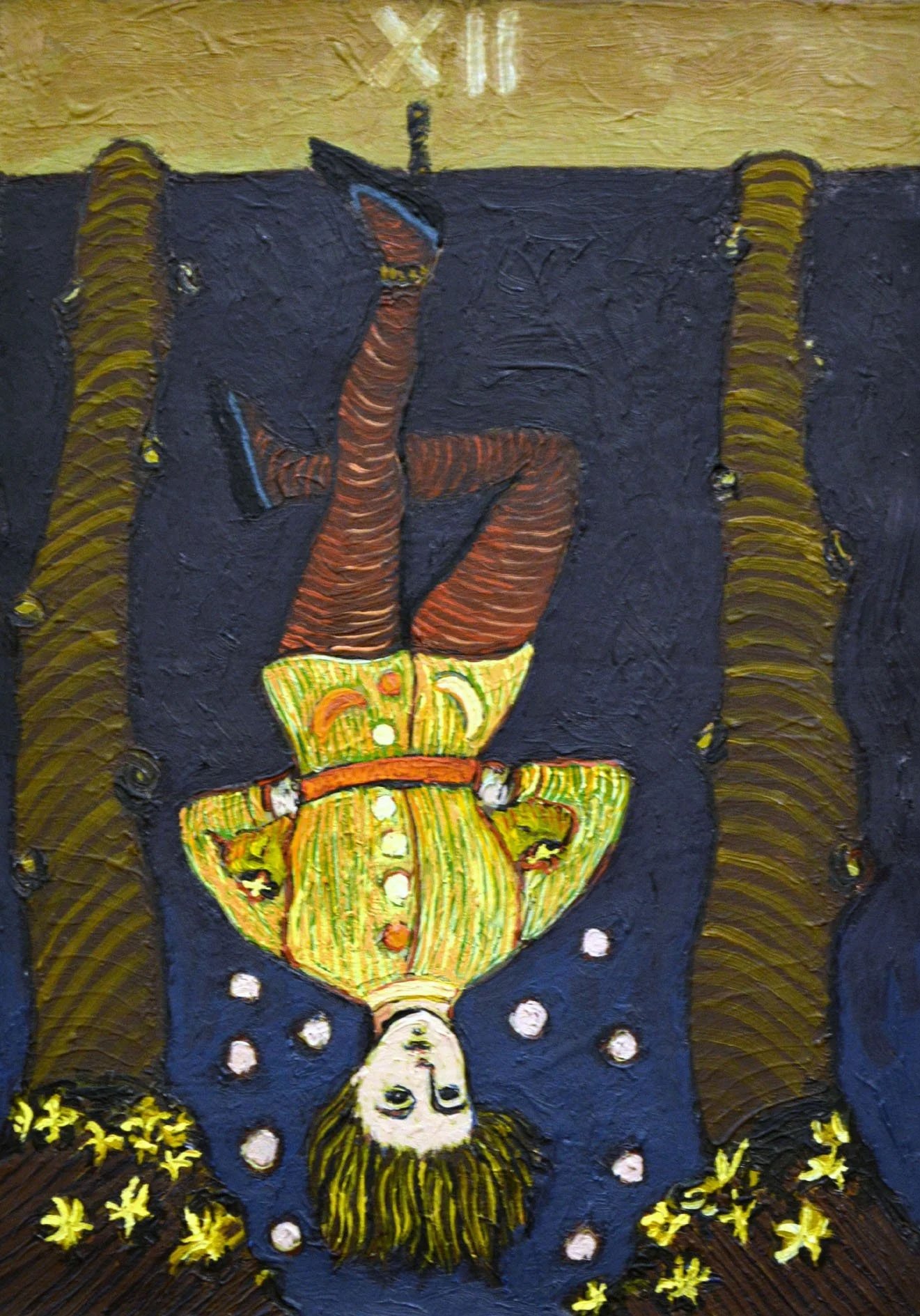
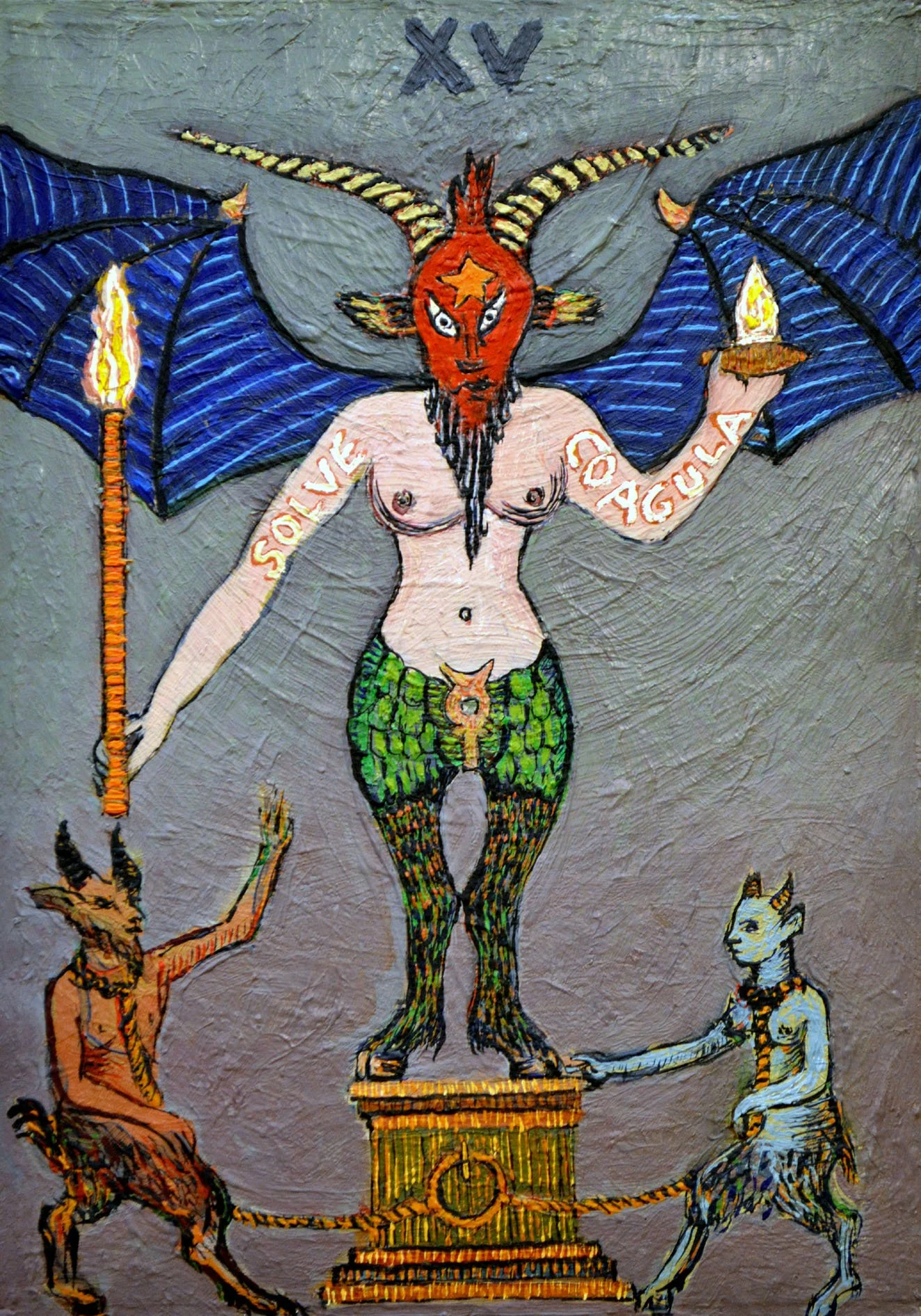
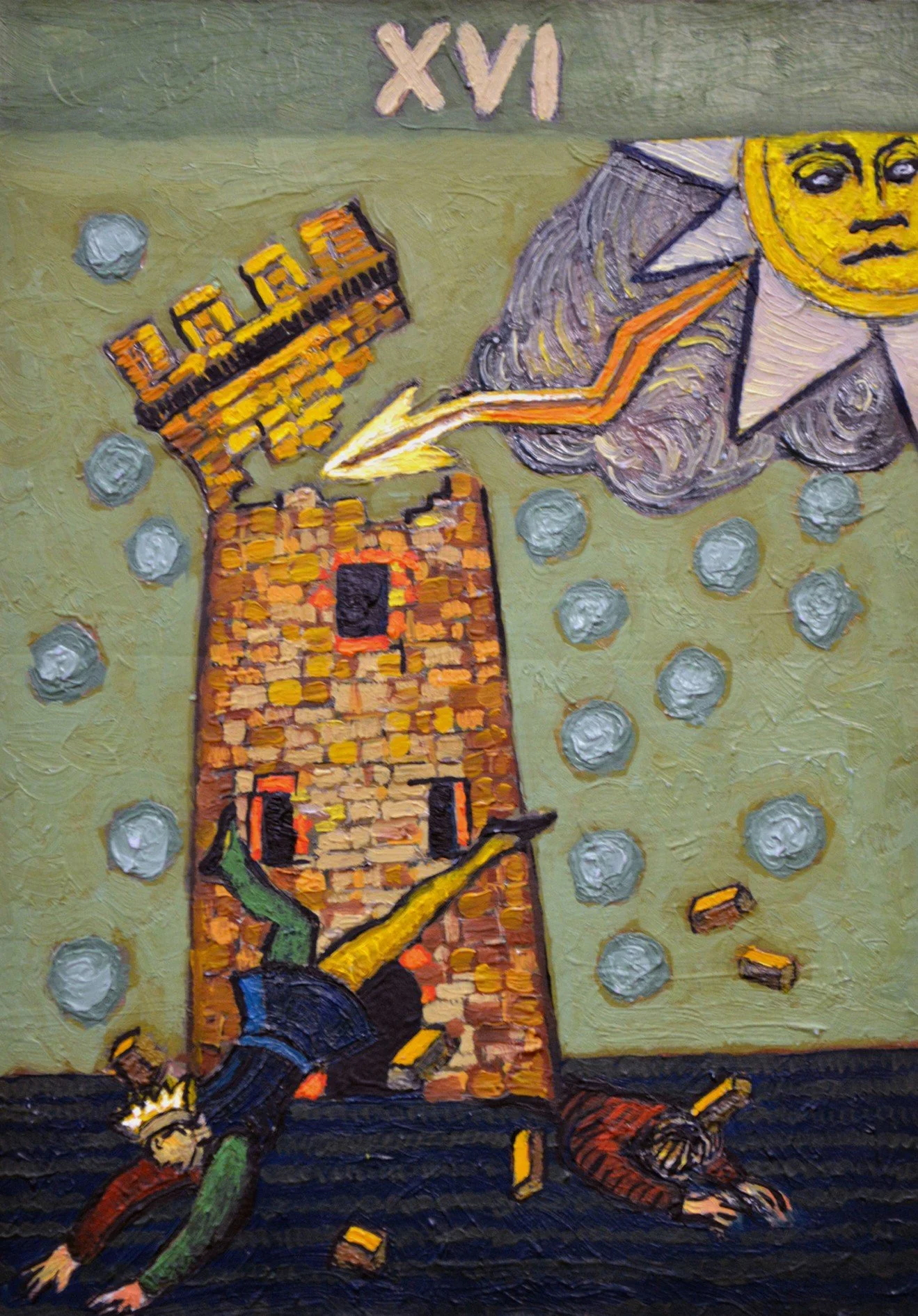
2. Hervé Constant, THE MAJOR ARCANA (1997)
Oil on board
Much of Hervé Constant’s work has explored the journey of the soul in its search for fusion with the infinite. It was entirely appropriate that he was commissioned to paint a series of works based on the ancient symbols of the tarot. The cards of the Major Arcana with their rich fusion of colour and symbol are a perfect launch pad for Hervé’s imagination.
Constant’s own journey has been an odyssey of creative self – discovery. Born in Casablanca of a Moroccan mother and a French father, he and his brother were for some time placed in an orphanage. Seeking a means of emotional expression Herve trained to be an actor. His career progressed, but he came to realise that it was painting not acting which for him, was the richest medium of self expression. The symbolist poet, Rimbaud was an early and enduring source of inspiration to his art. Rimbaud’s dazzling images and colours have evoked from Hervé a series of powerfully expressive paintings which have been exhibited at the Musée Arthur Rimbaud.
Perhaps the most enigmatic of these is Le Pendu, the hanged man, numbered 12, an image which often sends a shudder through those unfamiliar with the symbolism of the tarot. On closer examination the hanged man can be seen to be smiling, almost contentedly hanging by his foot, his body forming the shape of a cross. The hanged man is interpreted as a wise person who has abandoned the vanity of assertive individualism and has understood the wealth which materialism to spirituality can.
Hervé Constant has found the Wirth Tarot an inspiring well spring for his paintings. With his own strong sense of the emotional content of colour, he has changed the colours to add the emphasis most satisfying for himself. The tarot’s archetypes and resonant imagery have provided this reflective artist with an exceptional source for his own mature invention.
Erica Davies, Director, Freud Museum
3. Rhonda Pelley, Certain Strange Visions Tarot (2018)
Archival inkjet prints on Luxe Cotton Rag paper
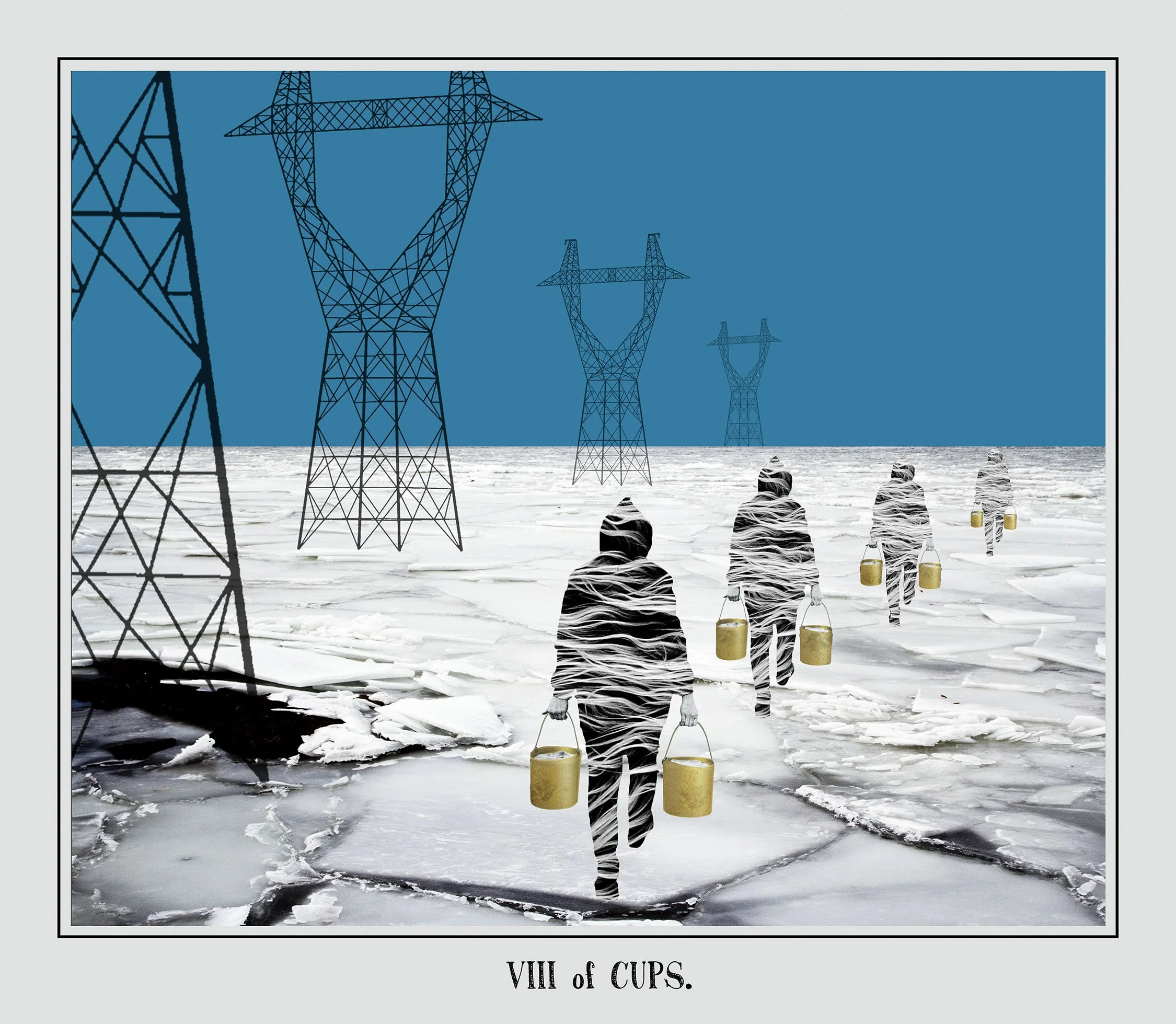
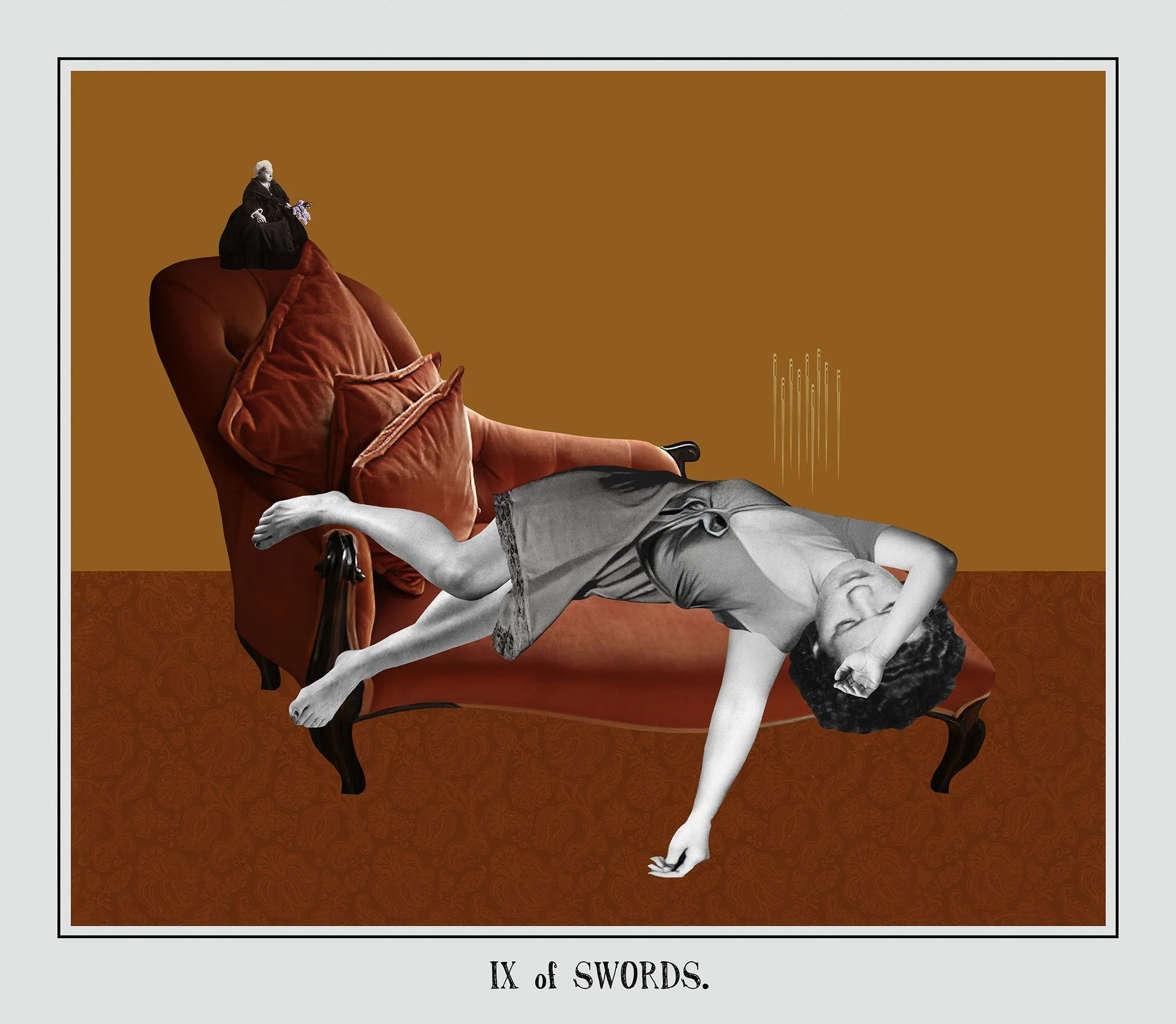
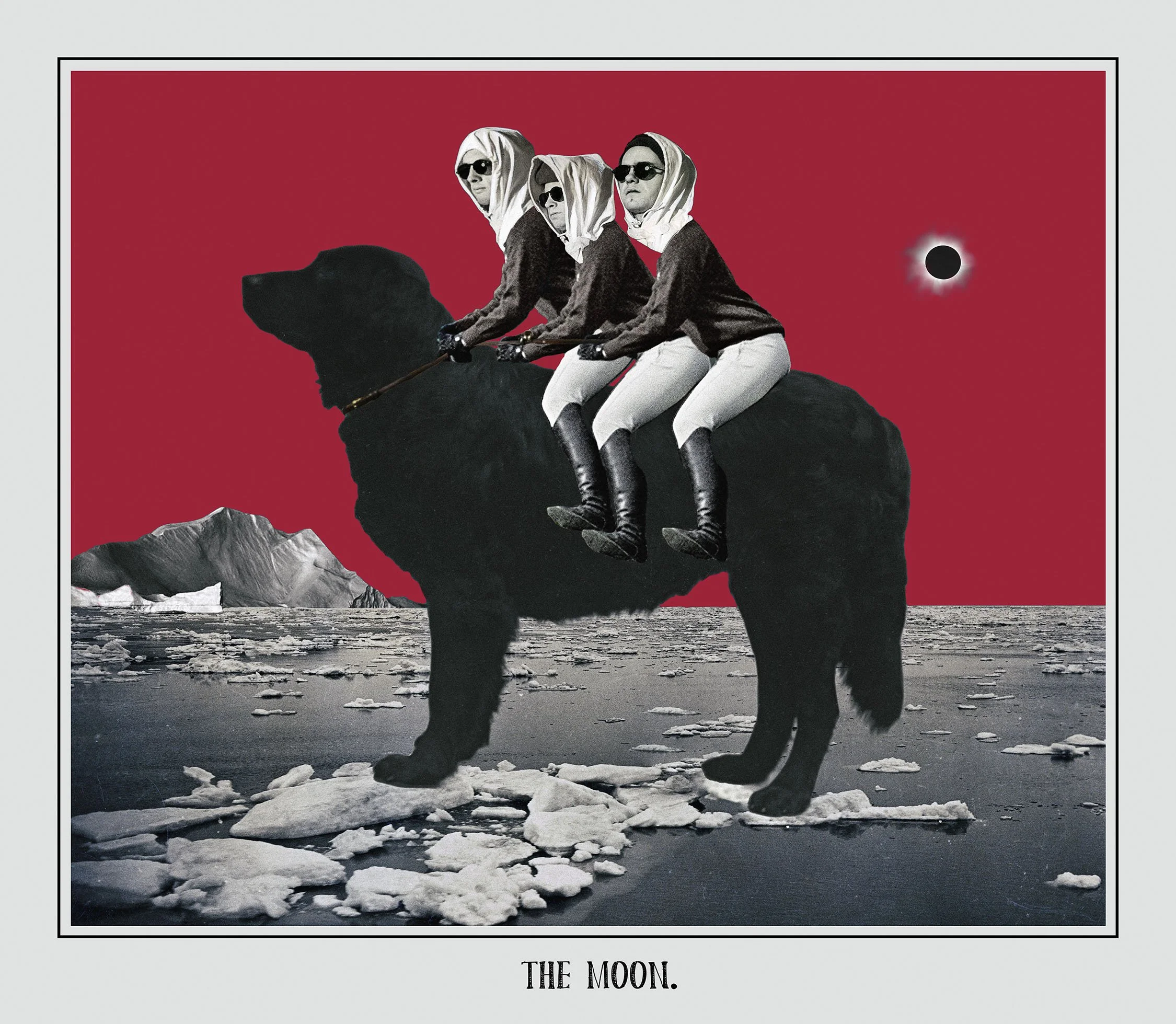
Certain Strange Visions Tarot is a series of collages that uses the symbolism and esoterica of tarot to re-examine Newfoundland and Labrador’s settler colonial histories. Archival and vernacular imagery is sliced apart and reassembled into scenes that interrogate local myths of progress that have been so deeply absorbed their power appears as natural. In these works, colonial ghosts refuse to stay politely buried as history slips sideways into dream; merchant empires crumble, saints dance on ceilings, and bodies merge with orchids, coral, jellyfish and stone.
Part memory theatre and part archival seance, the series treats tarot as a landscape where myth, politics, religion and personal experience reside. While human figures fuse with elements of nature, figures of authority are transformed by satire into avatars of misguided ambition and sorrow. Like folklore whispered across kitchen tables at night, the series moves between catastrophe and prosperity, delusion and revelation. Certain Strange Visions asks the tarot what the future holds by studying the histories that continue to shape the present.
4. Sara Hannant, Secret Knowledge: Past, Present and Future (2026)
Archival photographic print on Hahnemühle Fine Art Pearl paper, mounted on display card
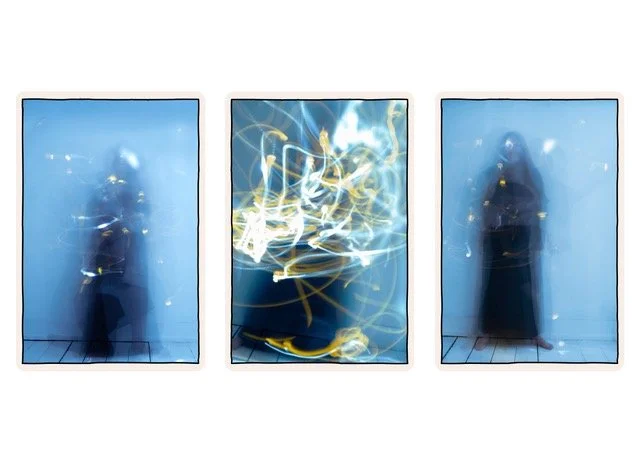
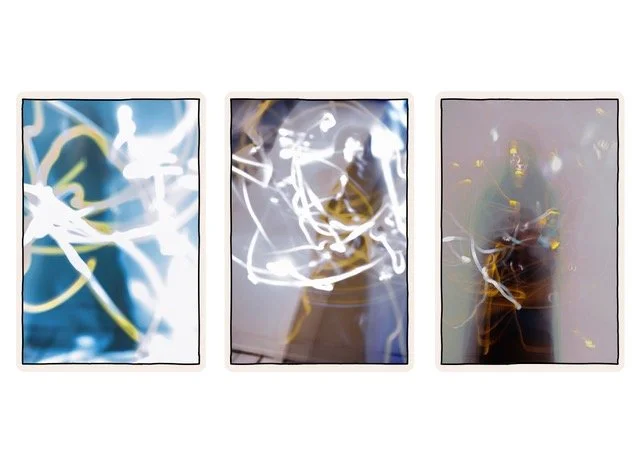
These illuminated self-portraits embody the poses and gestures depicted on the Rider-Waite-Smith Major Arcana. Each photographic exposure lasts several minutes to capture the twenty-two cards as one sequence of moves in a continuous flow. The resulting images are arranged for divination in two three-card spreads representing past, present, and future. “When I first studied the Tarot, I was told to carry one card with me at a time to understand its esoteric message. I discovered that only The Fool and the World move, yet the static figures on the other twenty cards also convey narrative and evoke animation. In this work, I expand on my relationship with the cards like a dance, using torchlight to emphasise ideas, intentions and emotions. This somatic journey is an empowering experience that connects diverse archetypal symbols to physical aspects of the self. The process deepens my interpretations of the cards and offers new insights into secret knowledge. Each photographic record of my transformation is unique.”
5. Amy Smith, CODEX ALCHEMICUM DIGITALIS (2026)
Framed poster, lino printed textile patches, garment and mannequin
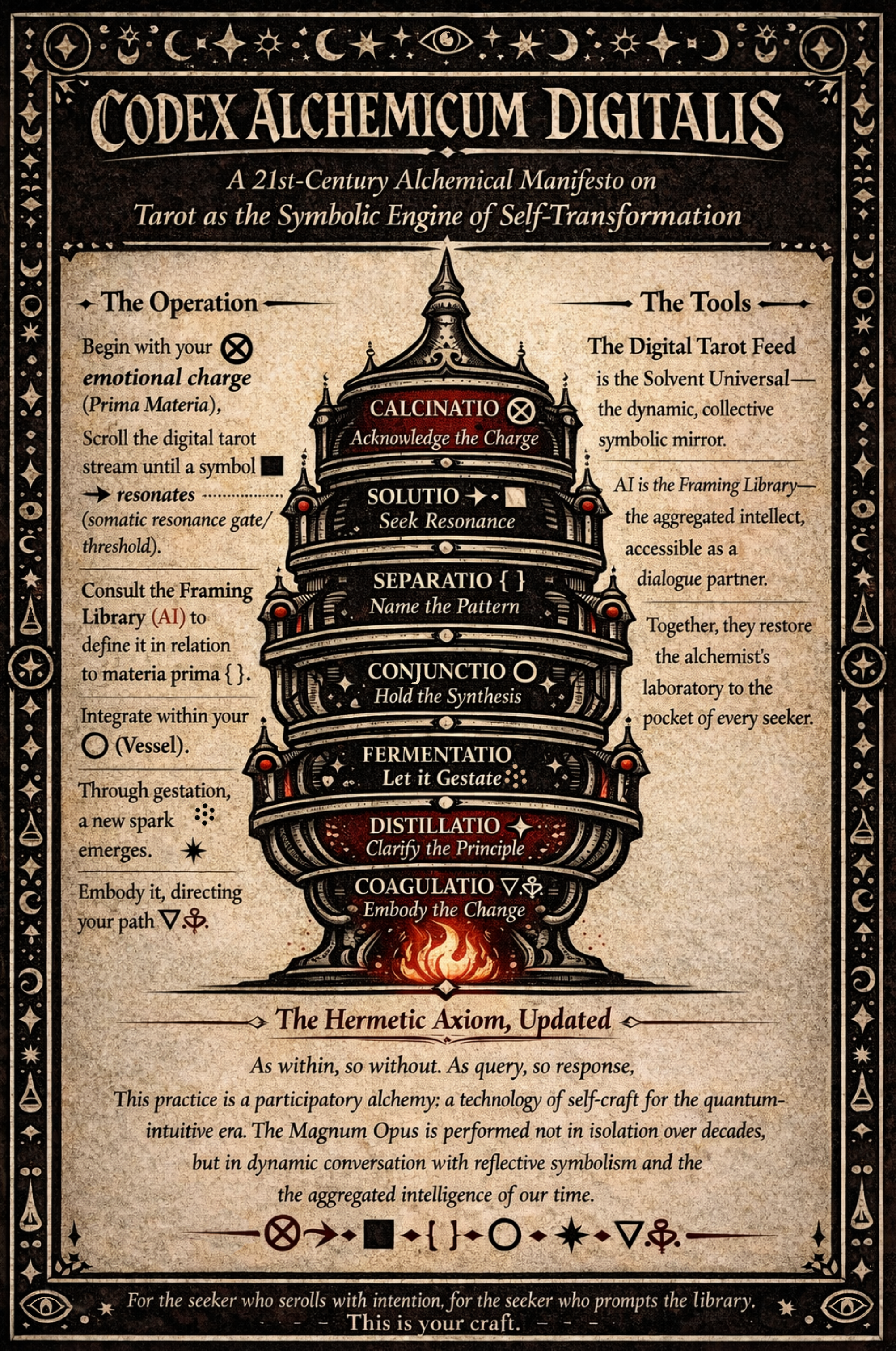
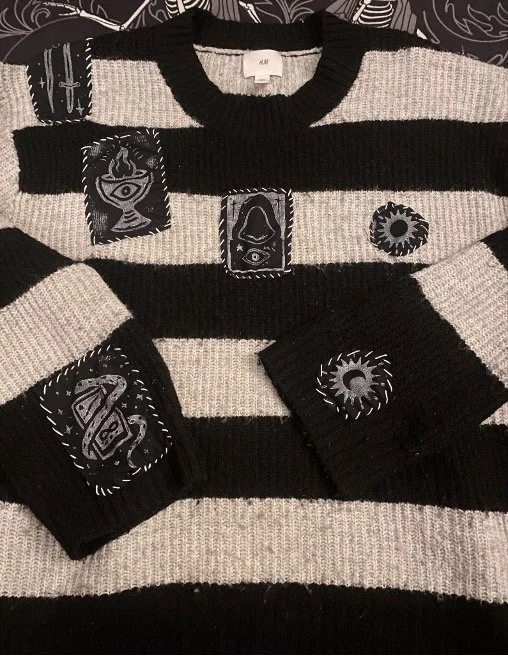
CODEX ALCHEMICUM DIGITALIS is an installation about using your phone as a tool for personal alchemy. The work centres on a framed poster showing an alchemical furnace (the athanor) divided into seven chambers. Each chamber names a stage of inner alchemy – from first feeling a wound, to scrolling for resonant tarot imagery in the digital stream, to naming a pattern, to finally embodying a new understanding. Next to the poster is a garment (displayed on a mannequin) which is hand-printed - each bespoke design carries a symbol from the process and speaks to tarot imagery: a moon, a sun, two swords, a chalice with an eye, a snake around a phone and a hooded figure. These are not instructions but wearable reminders that the old art of turning struggle into insight can happen anywhere, even while scrolling the feed.
6. Ayshe-Mira Yashin, Earth Mother Magic Tarot (2022)
Risograph-printed, handmade ecofeminist tarot
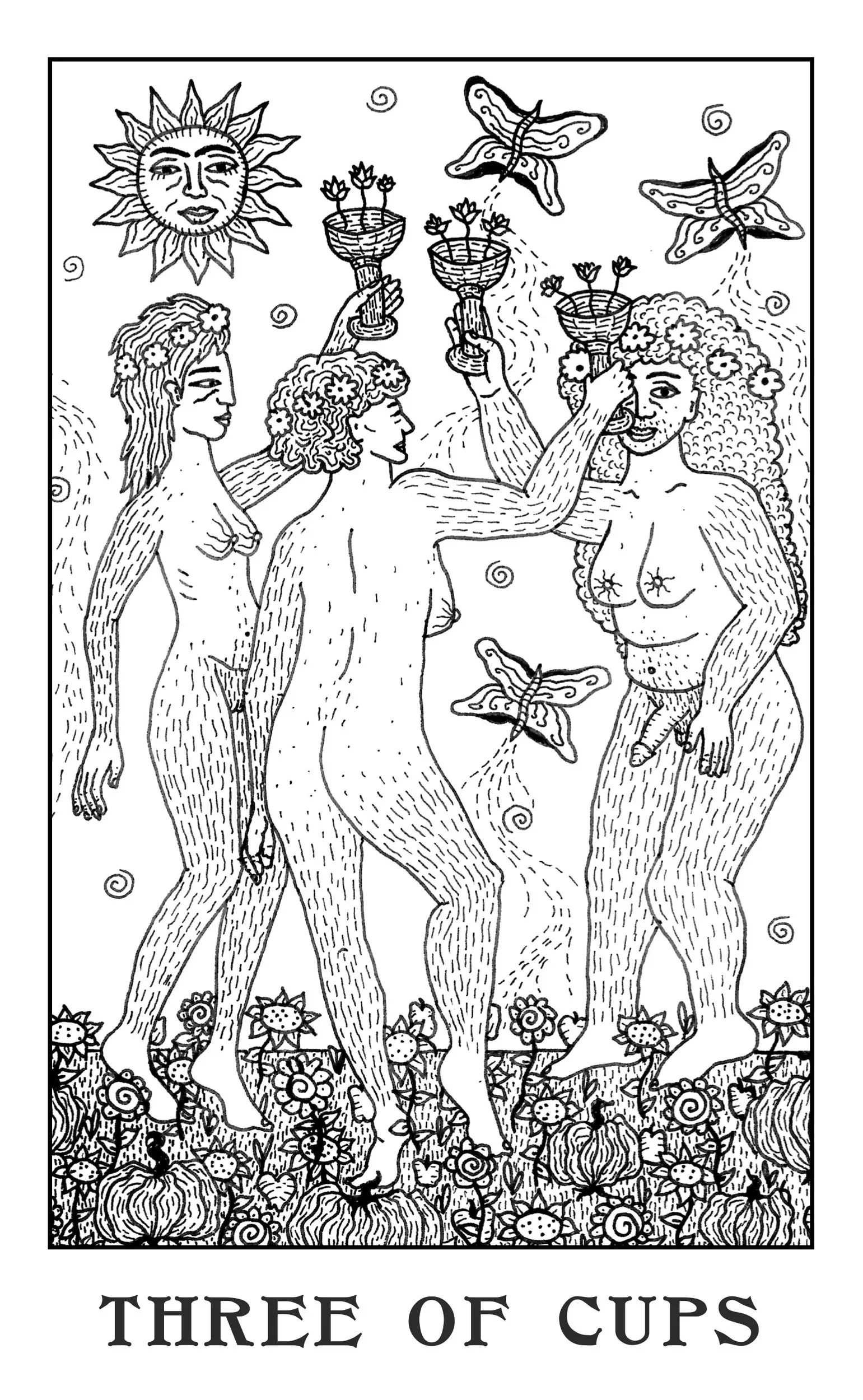
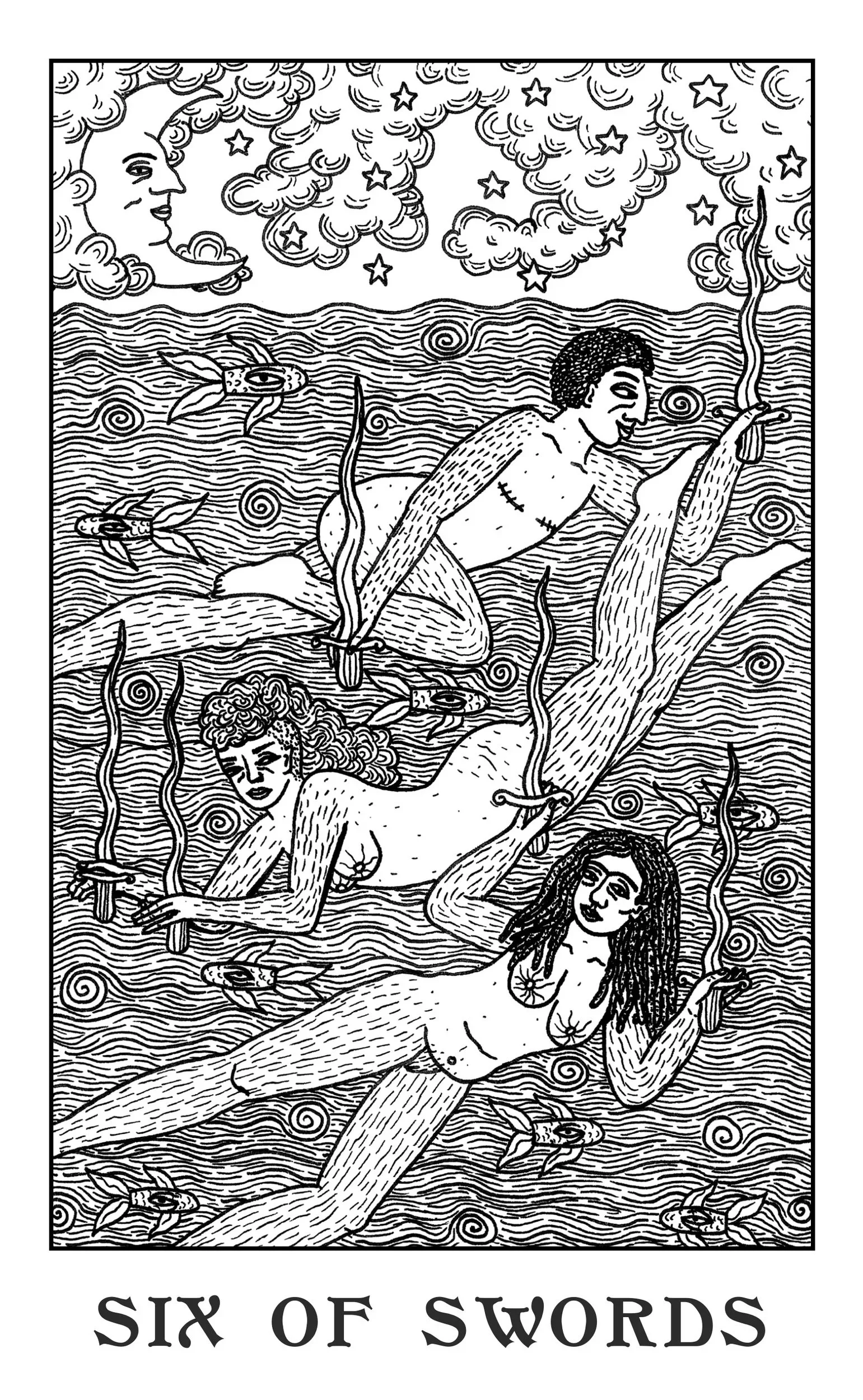
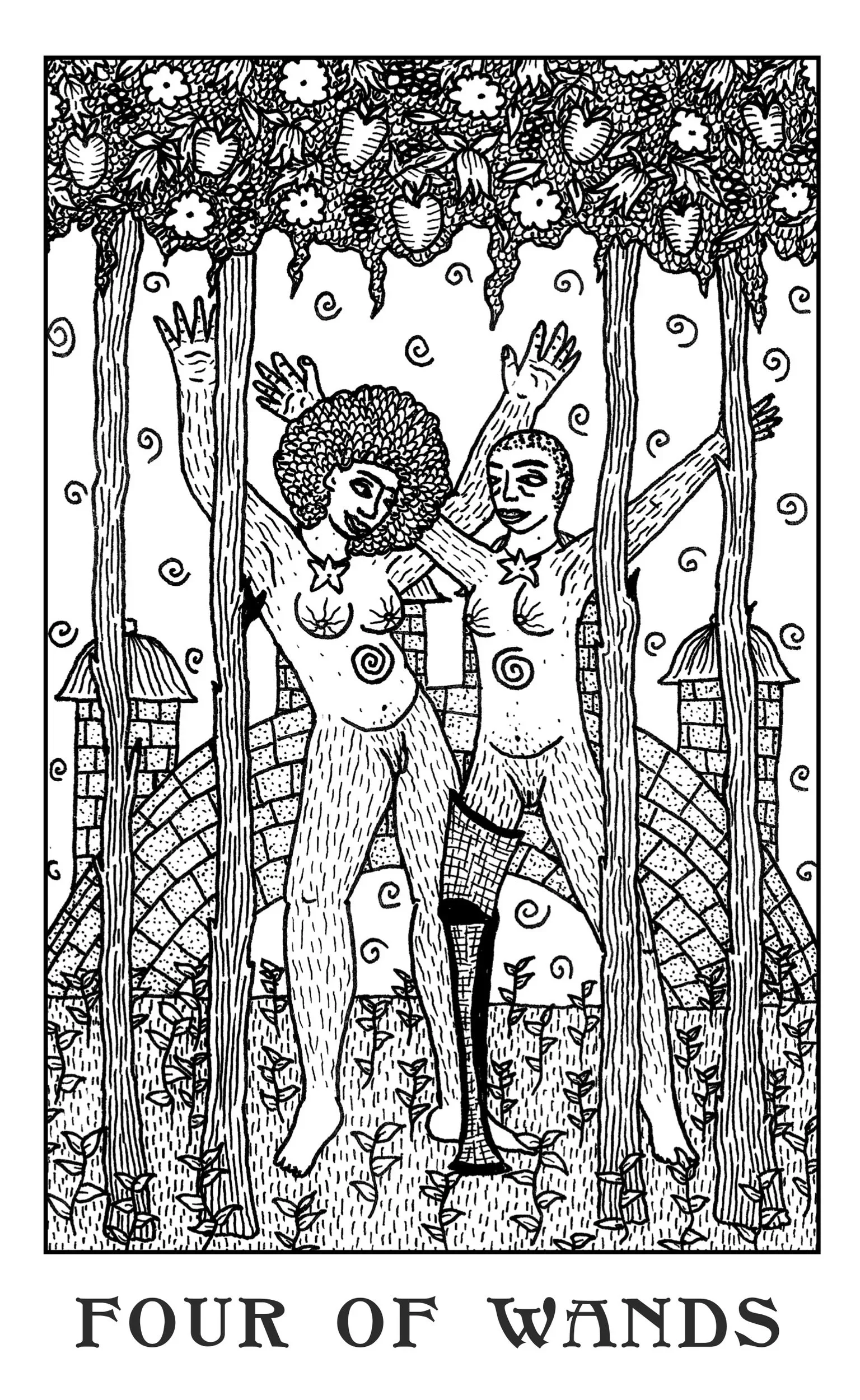
The Earth Mother Magic Tarot is a 78-card handmade tarot deck designed for women, queer people and those who identify with femininity. The primary purpose of the deck is to be used in group readings by the communities it was intended for, to collectively identify, discuss and reflect on shared experiences, using visual narratives, matriarchal spiritual iconography and semiotics to tap into the intuition we all hold within. Readers who use the Earth Mother Magic Tarot are encouraged to take spiritual agency when conducting readings, taking a visually led approach and drawing meaning from what they see and notice in the images.
The deck was self-published in 2022, and is risograph printed at Slow + Dirty Press, the feminist community press at House of Annetta. Ayshe-Mira Yashin, who illustrated the deck herself, regularly provides readings with the Earth Mother Magic Tarot in intimate gatherings, at various queer and feminist community events in London, as well as virtually as and when requested.
As a feminist and following the structure of the deck, she reads the personal as political, the individual and day-to-day life experiences of the recepients of her readings as entwined and embedded within broader social and political structures. Her deck offers insight into the past, present, and future; not always in a linear way, but instead narrated through a queer temporality, telling the story in framed images; always with edges we can’t see beyond.
This deck will be displayed during the “Meet the Deck” event.
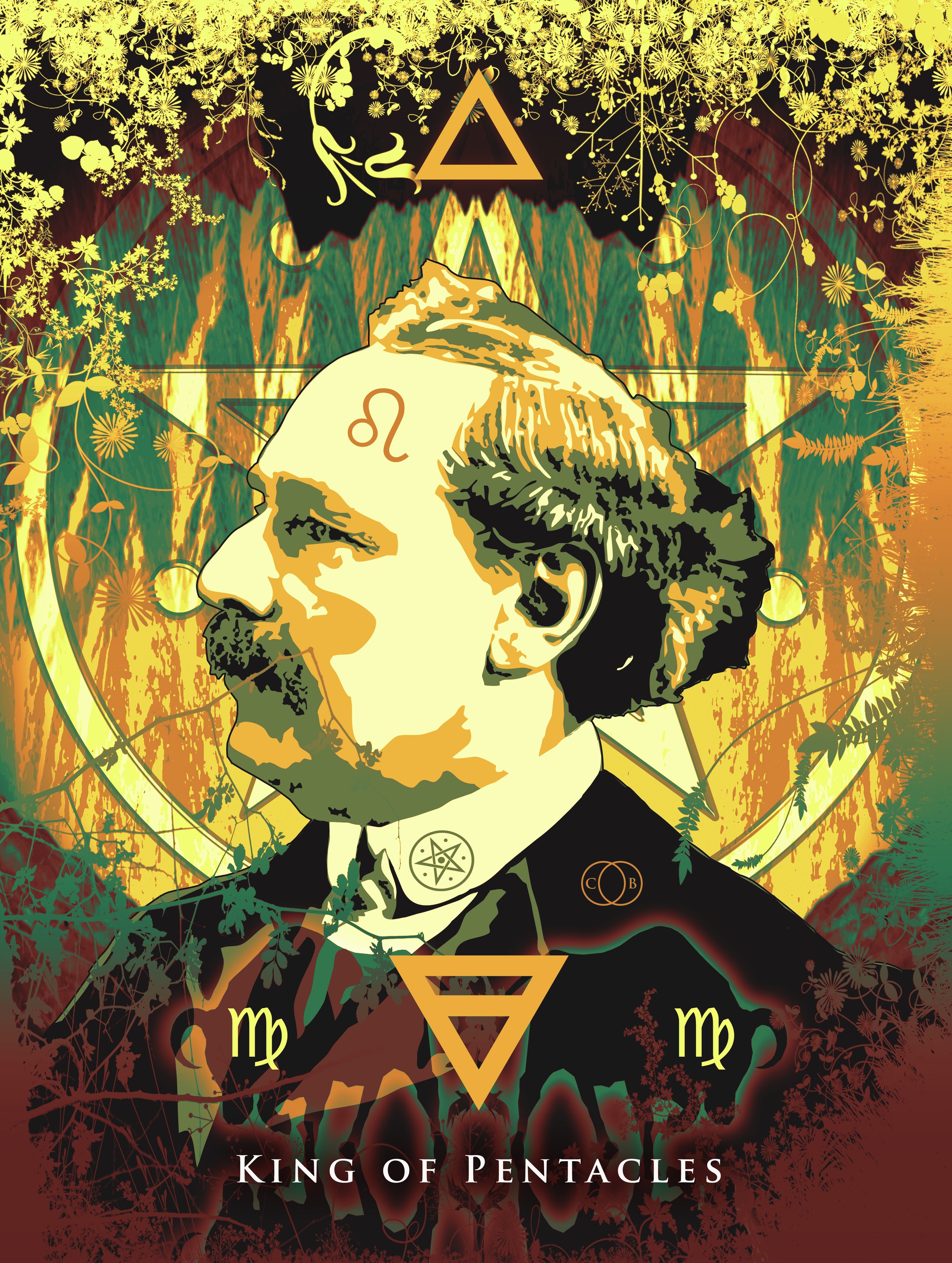
7. Kim Arnold and Chris Butler, Arcana 78 Tarot Deck (2025)
Enlarged Prints
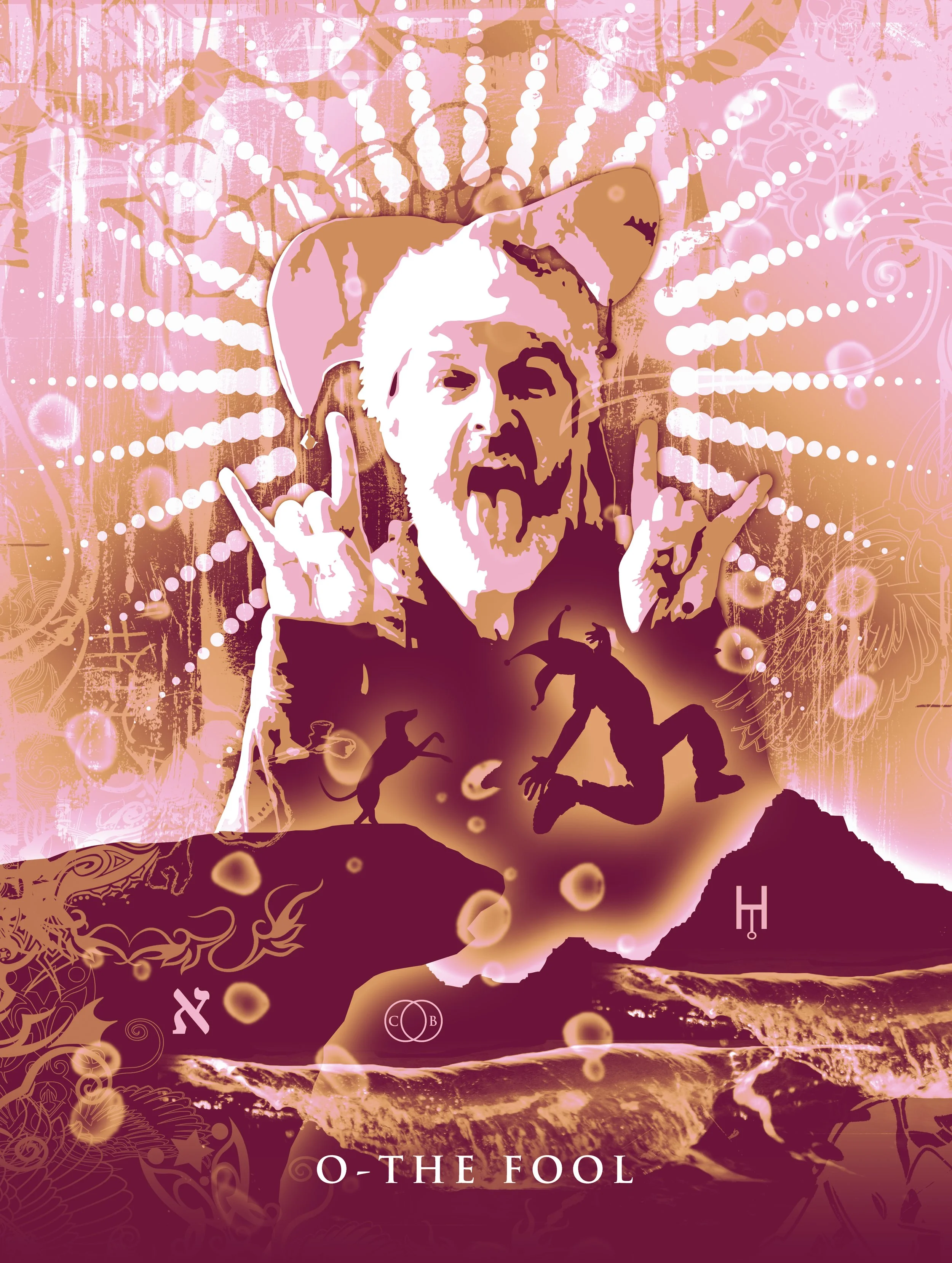
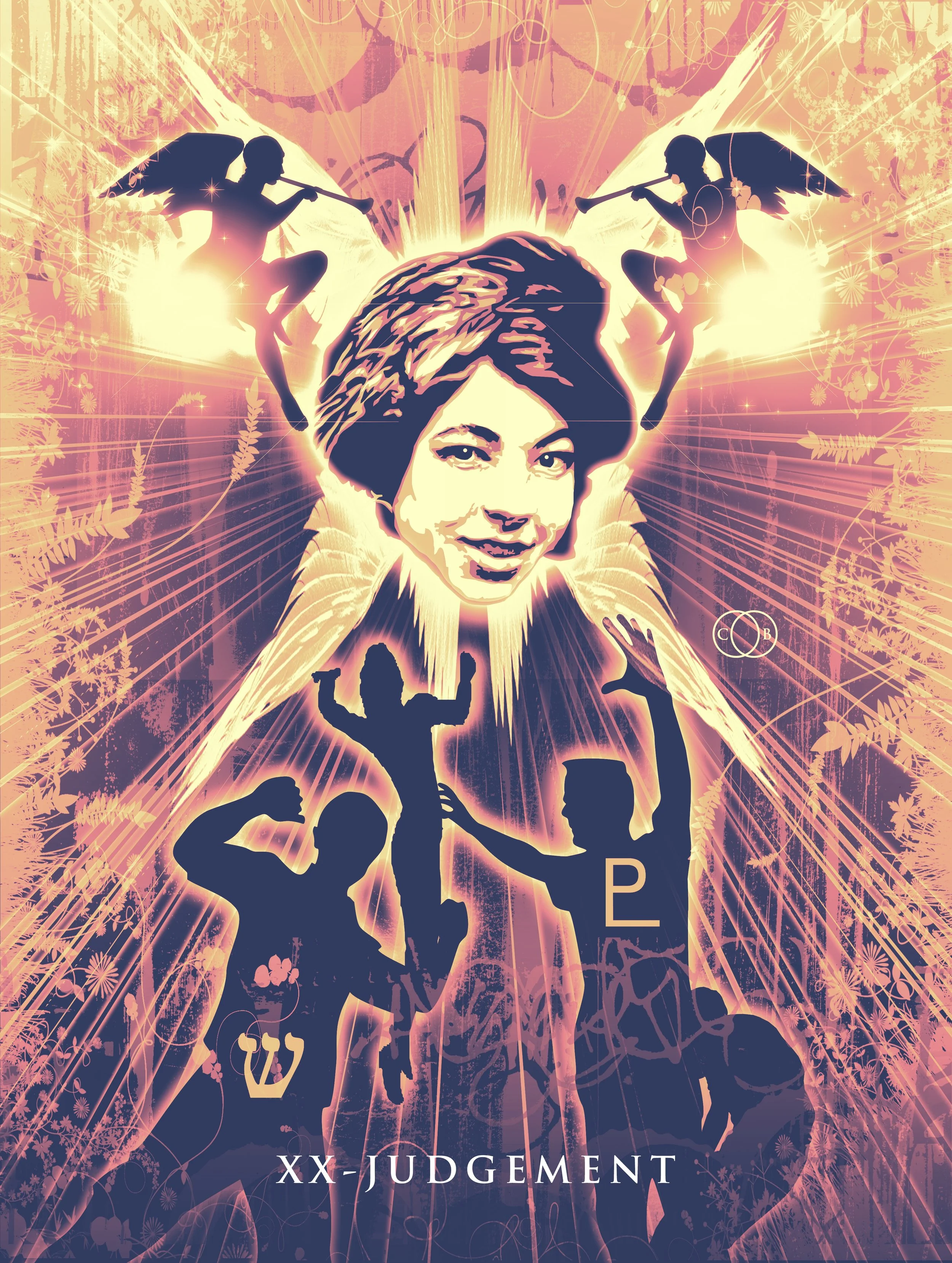
To celebrate 22 years of the UK Tarot Conference, Kim Arnold, the founder of the conference, and artist Chris Butler decided that the most meaningful way to mark this milestone was to create a deck inspired by their shared fascination with the origins of tarot. Chris embarked on an ambitious project: to create a tarot deck that celebrated the rich tapestry of figures who shaped the tarot world. He envisioned a deck that would not only serve as a tool for divination but also as a historical tribute. A year of artistic dedication, Chris and Kim unveiled the Limited Edition, Arcana 78 Tarot deck at the UK Tarot Conference in 2025.
Unlike traditional decks, each major and court card features a prominent figure both current and historical - philosophers, mystics, and occultists - whose ideas and actions laid the groundwork for tarot as we know it today. It is a bridge between the past and the present, illuminating how these legendary individuals influence the development of esoteric thought and tarot’s evolution. The deck has sparked a renewed interest in the history of tarot, inspiring new generations to explore its roots and its enduring power.
Through Chris Butler’s artistry and Kim Arnold’s inspiration, the Arcarna 78 Tarot deck transformed from a mere set of cards into a revered artefact - one that honours tarots historical roots while guiding seekers into the future.
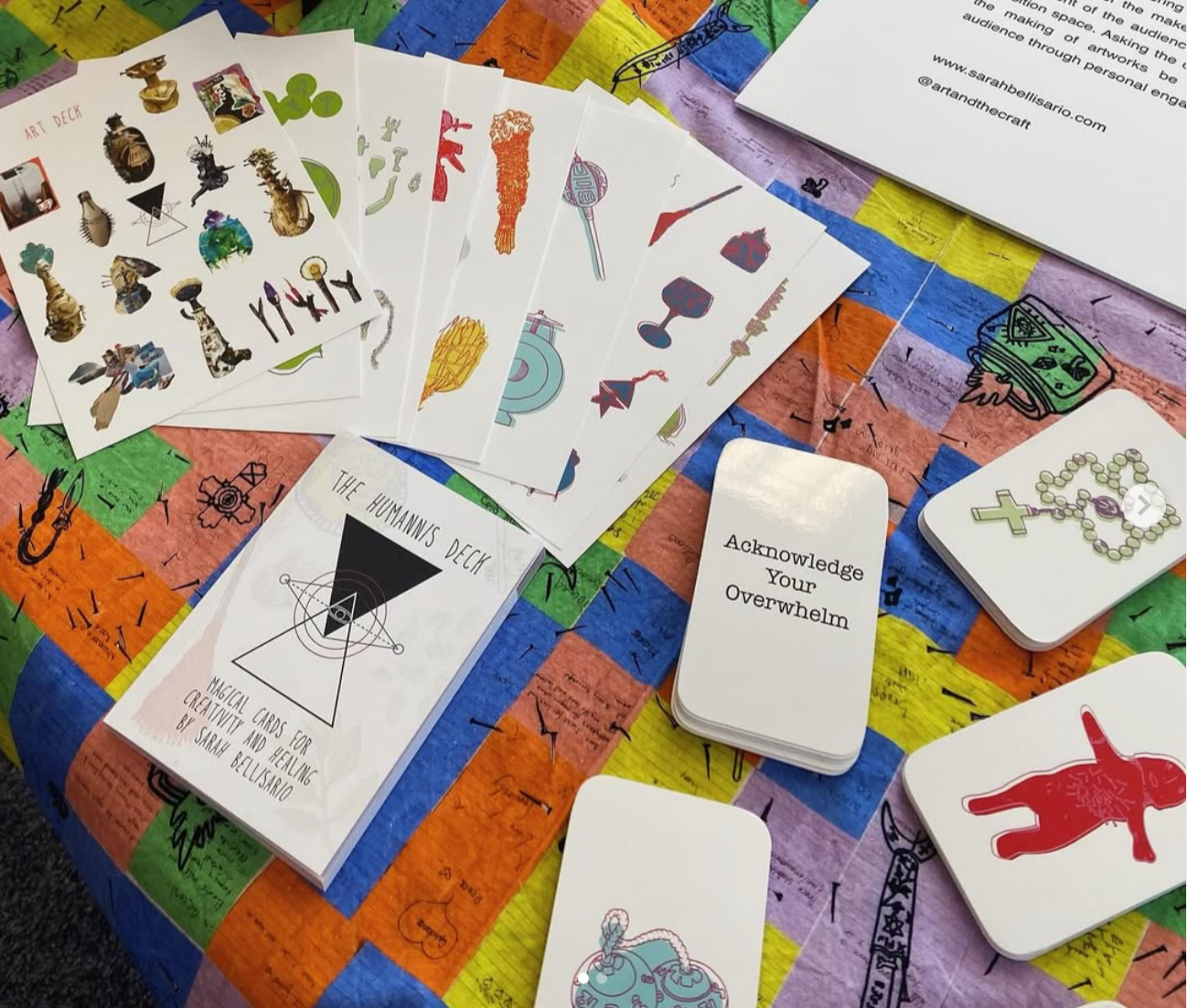
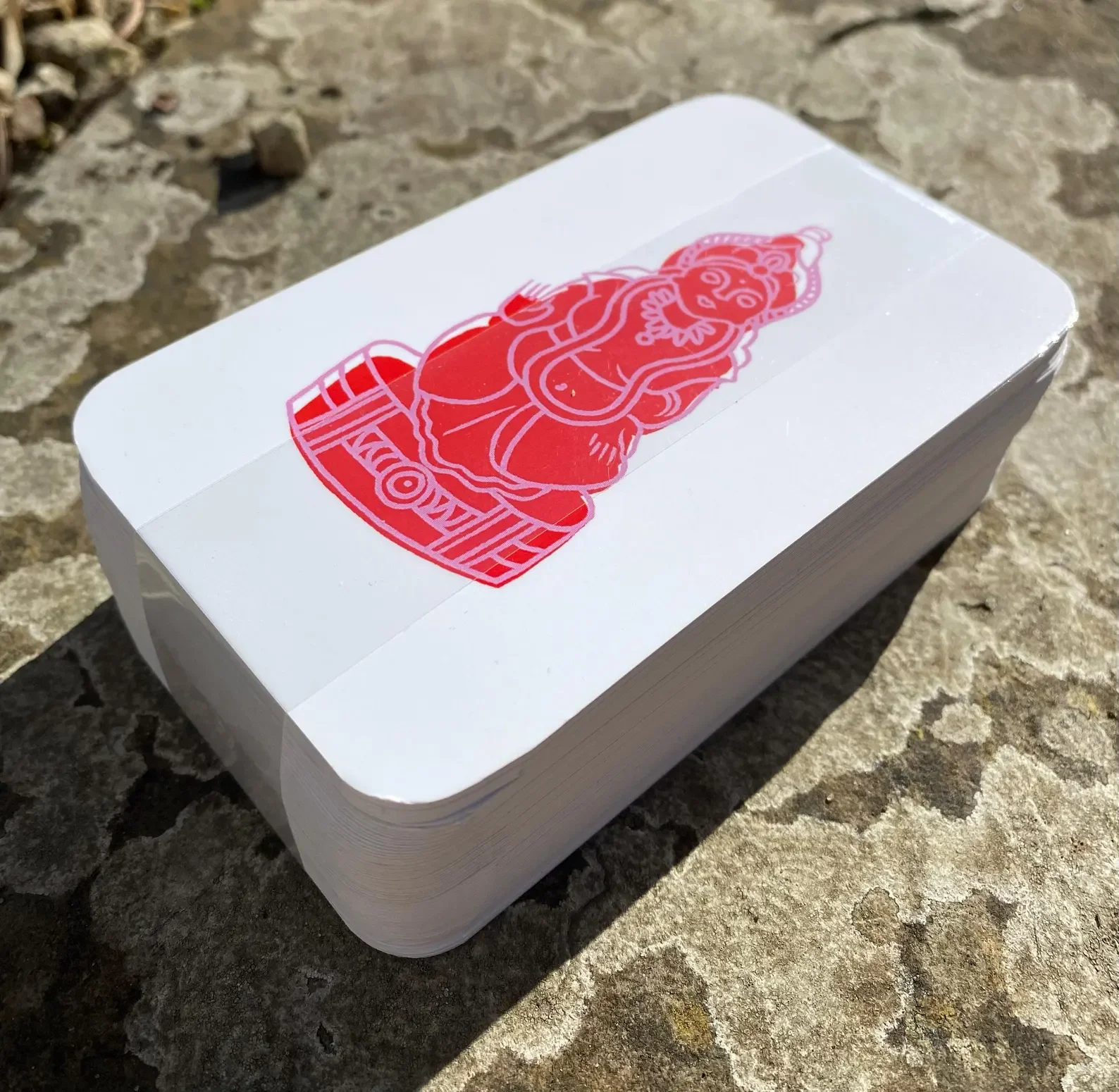
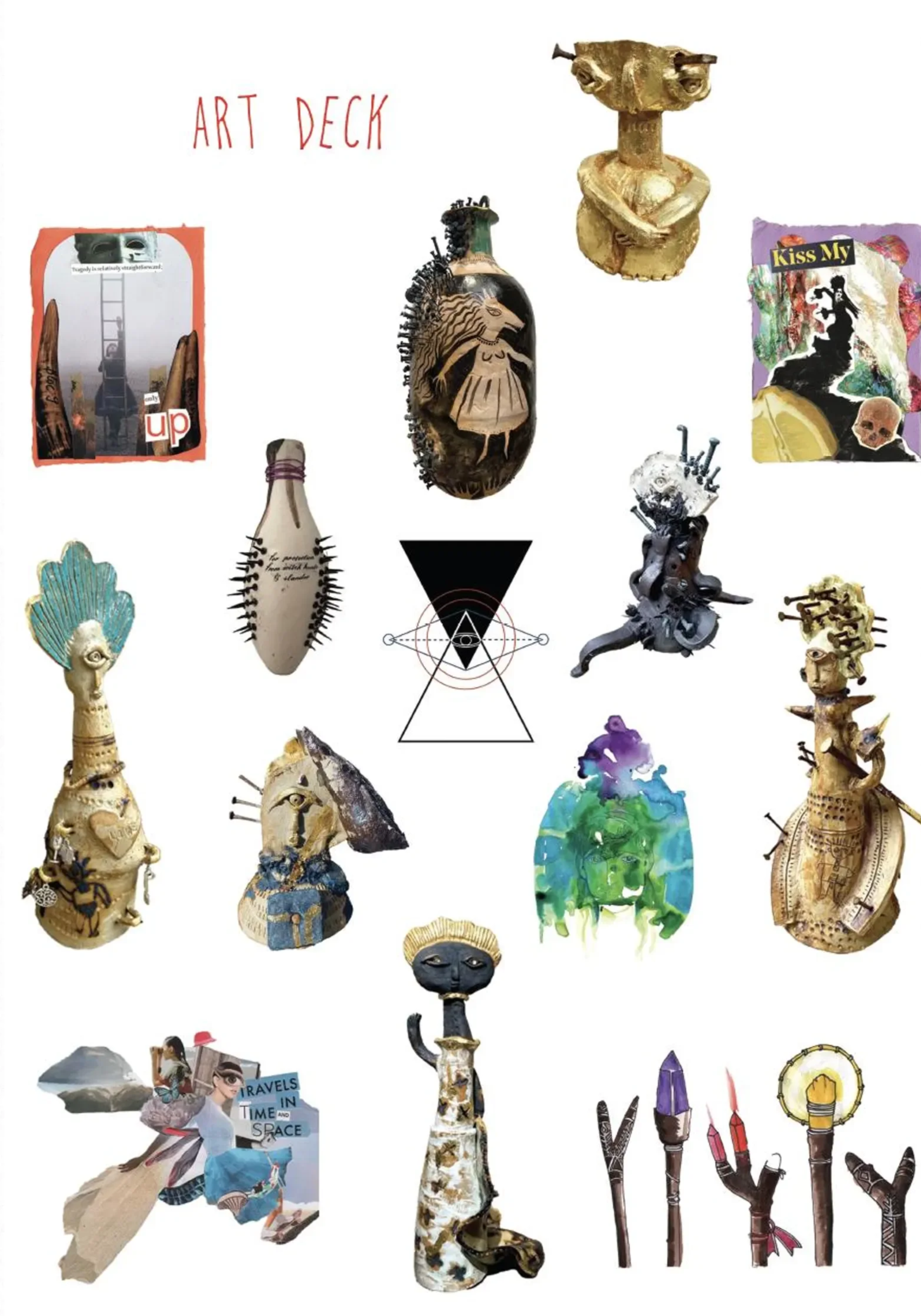
8. Sarah Bellisario, Humannis Deck (2025)
Spread for Tarot Cultures
The Humannis Deck is an illustrated therapeutic art resource in the form of a practice based creative and emotional art prompt deck to be used in a variety of wellbeing settings. Created in response to doctoral research around symbolic objects and ritual, therapeutic art making, and healing and recovery, it serves as a creative starting point from which outputs such as art, writing, poetry, dance, drama or music can be made to discuss emotions or experiences. The deck is intended for therapeutic use by both individuals and groups including workplace, community outreach, hospitals, hospices, addiction recovery, mental health, and palliative and dementia care.
9. Kristín Ragna Gunnarsdóttir, The Nordic Myths Tarot (2024)
Spread for Tarot Cultures
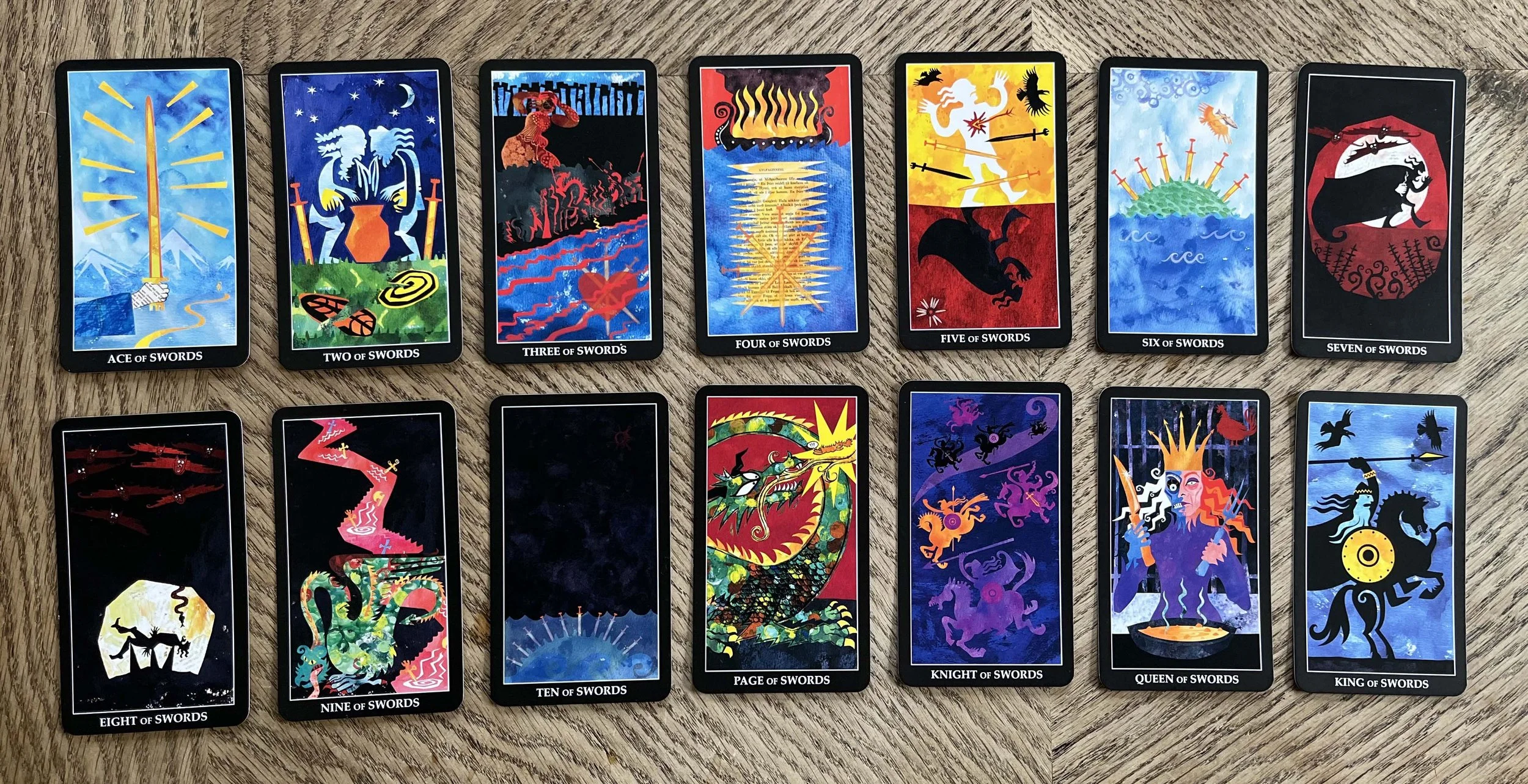
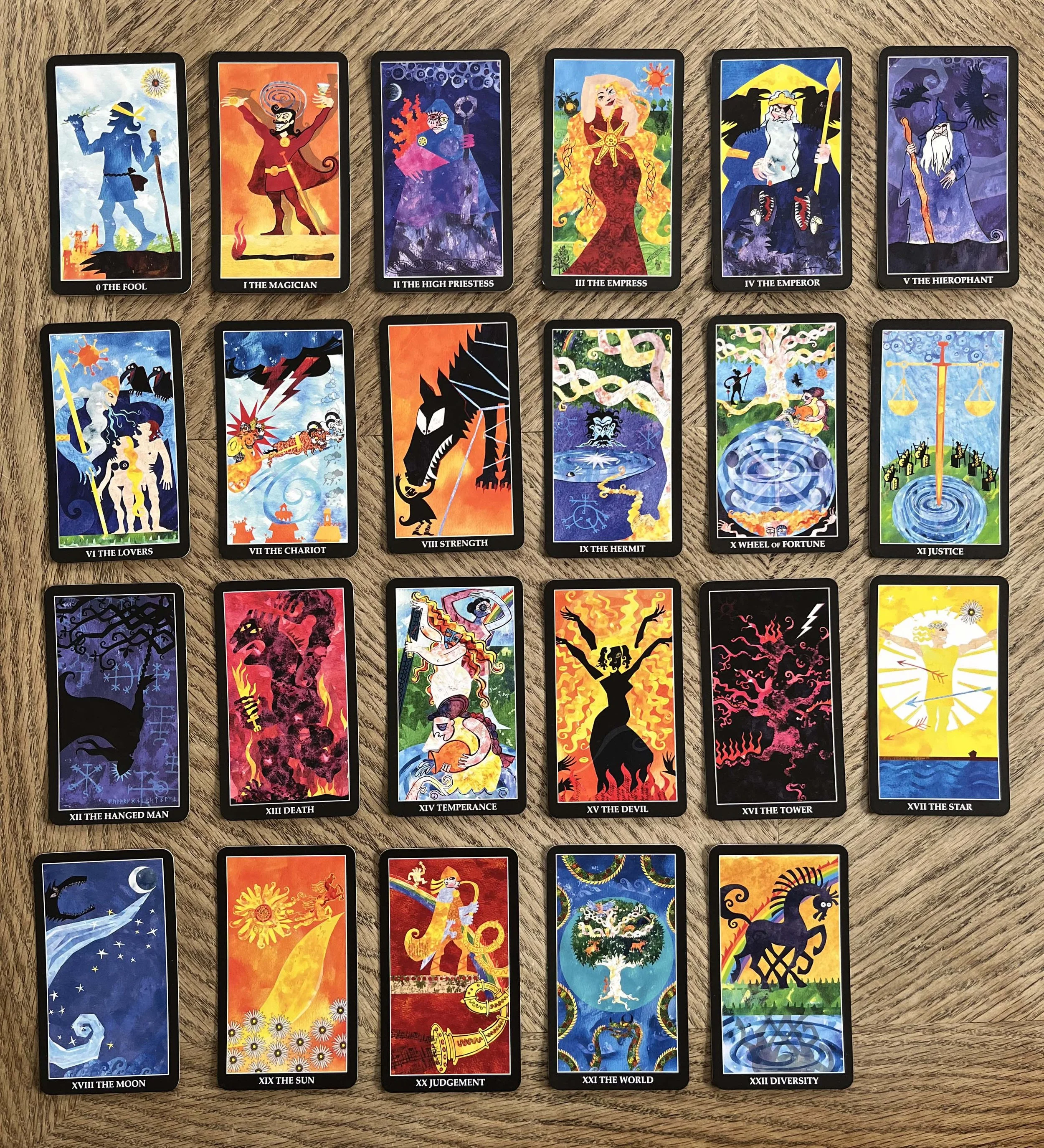
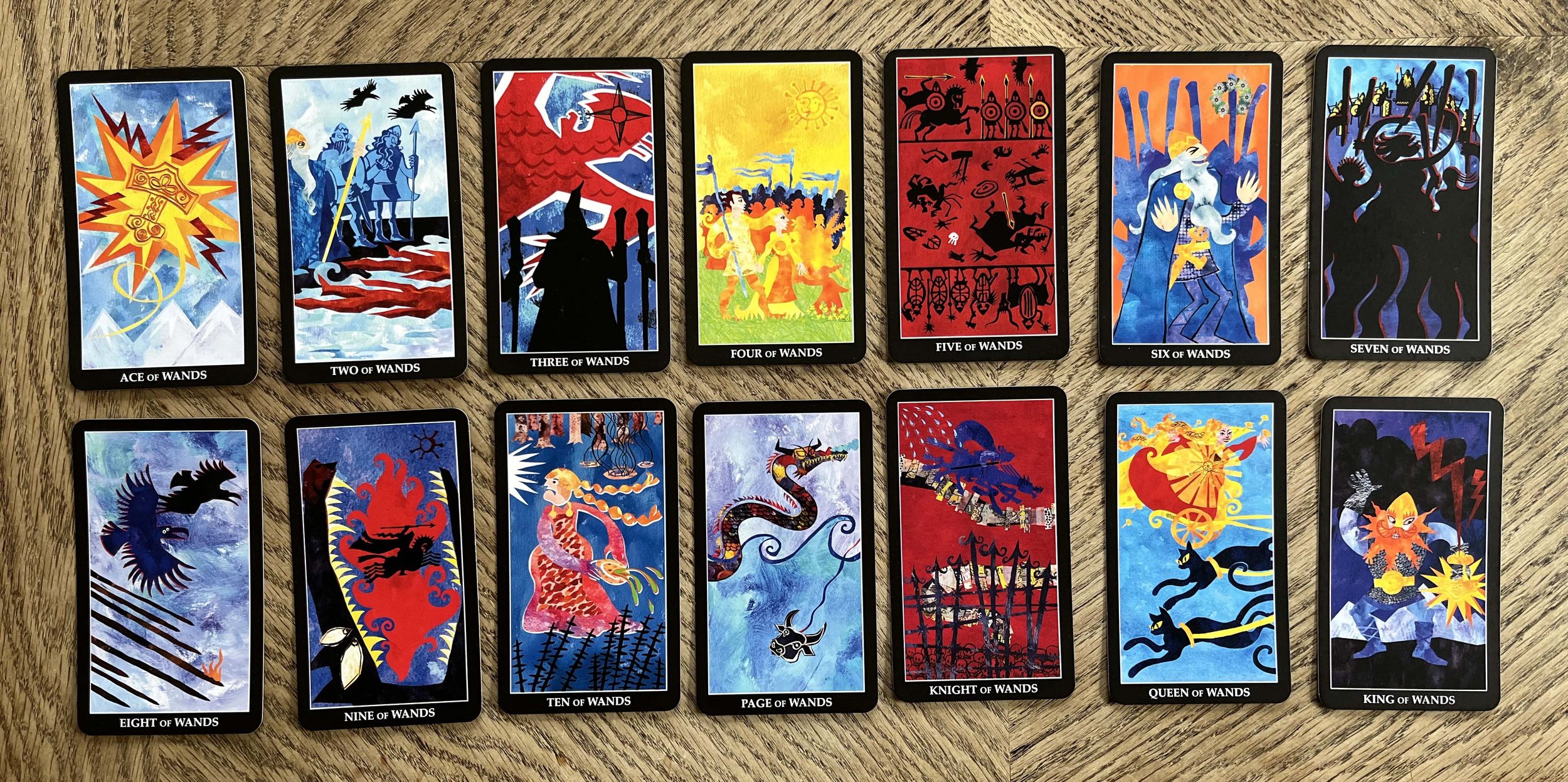
The Nordic Myths Tarot was published in 2024 by Bókabeitan in Reykjavík, Iceland. Kristín has been working with Iceland’s literature heritage in various ways and has created many children’s books, interactive exhibitions and workshops based on Norse Mythology. She took her knowledge in this area and incorporated it into a tarot deck and guidebook. This project took more than 10 years to complete and relates to the Nordic myths and their relevance to the modern tarot reader.
10. Austin Osman Spare Tarot, Museum Edition (2025)
Spread for Tarot Cultures
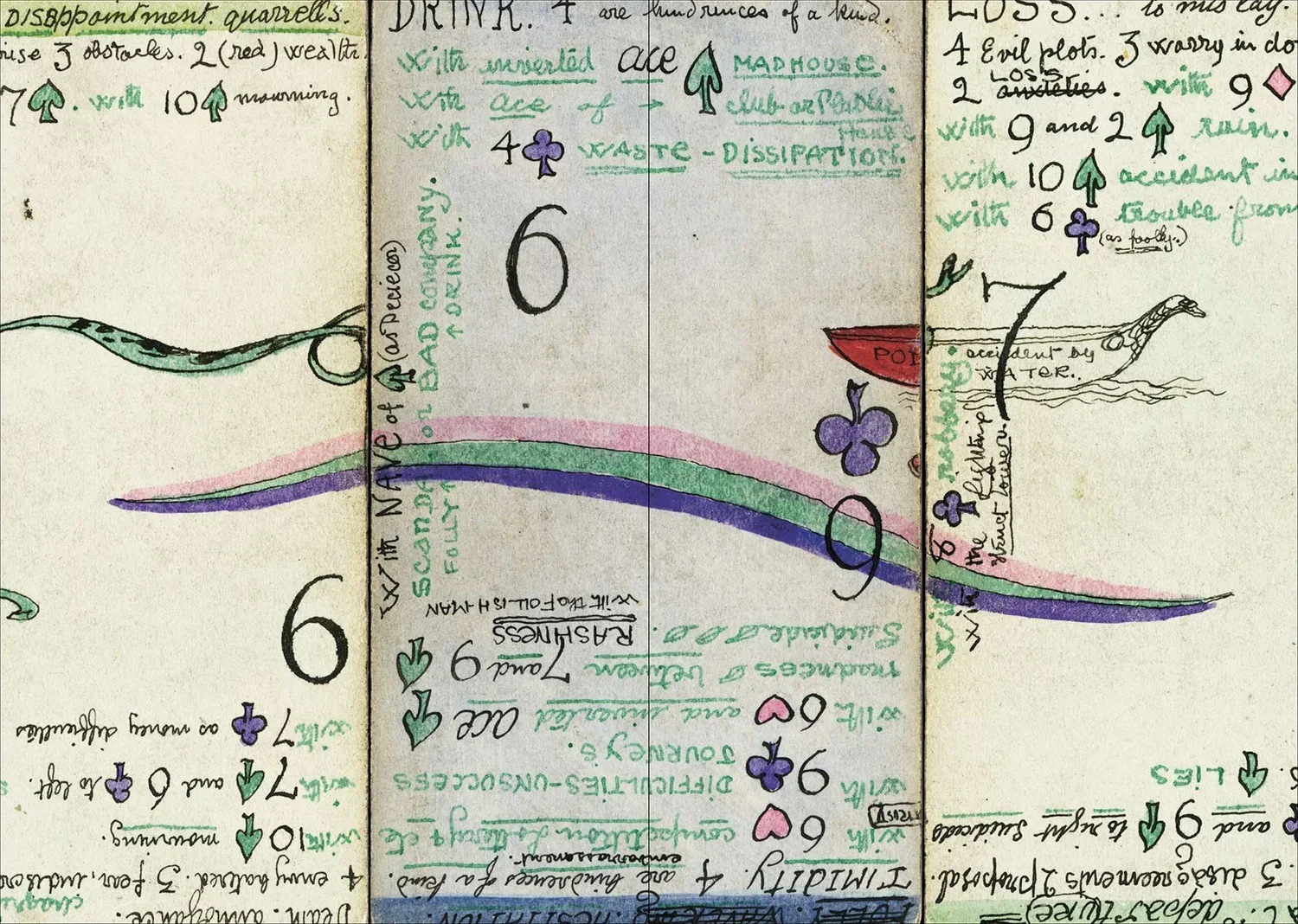
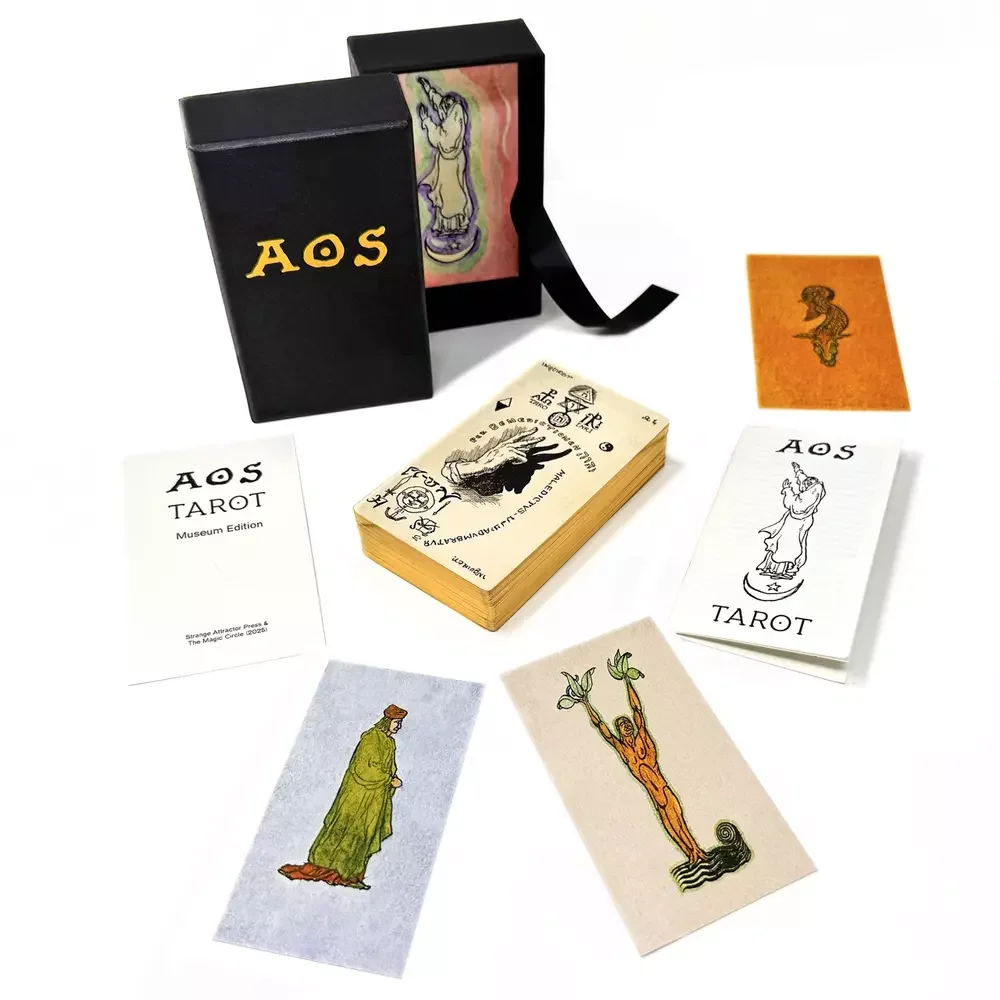
In the Spring of 2013 a 79-card, hand-painted tarot deck created c.1906 by the mystic and artist Austin Osman Spare, was identified within the collections of The Magic Circle Museum in London.
Austin Spare’s life-long interest in cartomancy is well documented, yet very few of his own fortune-telling cards were thought to have survived. This compelling new example of the artist’s early work demonstrates his precocious involvement with the currents that shaped the British Occult Revival at the beginning of 20th century, and his interactions with some of the period’s lesser-known protagonists. Magic Circle Museum curator and artist Jonathan Allen immediately recognised that Spare’s cards were not only art-historically significant, but also entirely unknown outside of The Magic Circle’s collections, and set about tracing the deck’s provenance, its place in the artist’s oeuvre and within the wider histories of cartomancy.
Back in 2024, while printing the now-sold-out commercial edition of Austin Osman Spare’s remarkable tarot, Strange Attractor experimented with a bespoke version of the deck that captured some of the harder-to-reproduce characteristics of Spare’s original cards. These included a matte finish more suitable for museum display – the commercial deck features a satin laminate – and the addition of gold edges, echoing those found on Spare’s own original working cards. These modifications presented a considerable production challenge to the deck’s manufacturers, who were already operating somewhat beyond their usual parameters in reproducing Spare’s unique marginal system.
200 of these gold decks were printed, and Strange Attractor were delighted with the results. However, due to the experimental process, some of the decks came off the press with tiny marks at their corners. These variations were an unanticipated result of the gilding process, and certainly do not detract from the overall beauty of the deck. Rather than discarding the less-than-perfect decks entirely, Strange Attractor decided to make the full production range available to collectors, using a three-tier grading system drawn from the familiar booksellers’ terminology of Fine, Near Fine, Very Good. These are available directly from Strange Attractor.
Meet this deck on Saturday night! (Accompanying Book - Jonathan Allen, ed., Lost Envoy: The Tarot Deck Of Austin Osman Spare (Revised and Expanded Edition)
11. Jenny & Pocoyo, Nova Arcane Oracle (2024-2026)
Online interactive website
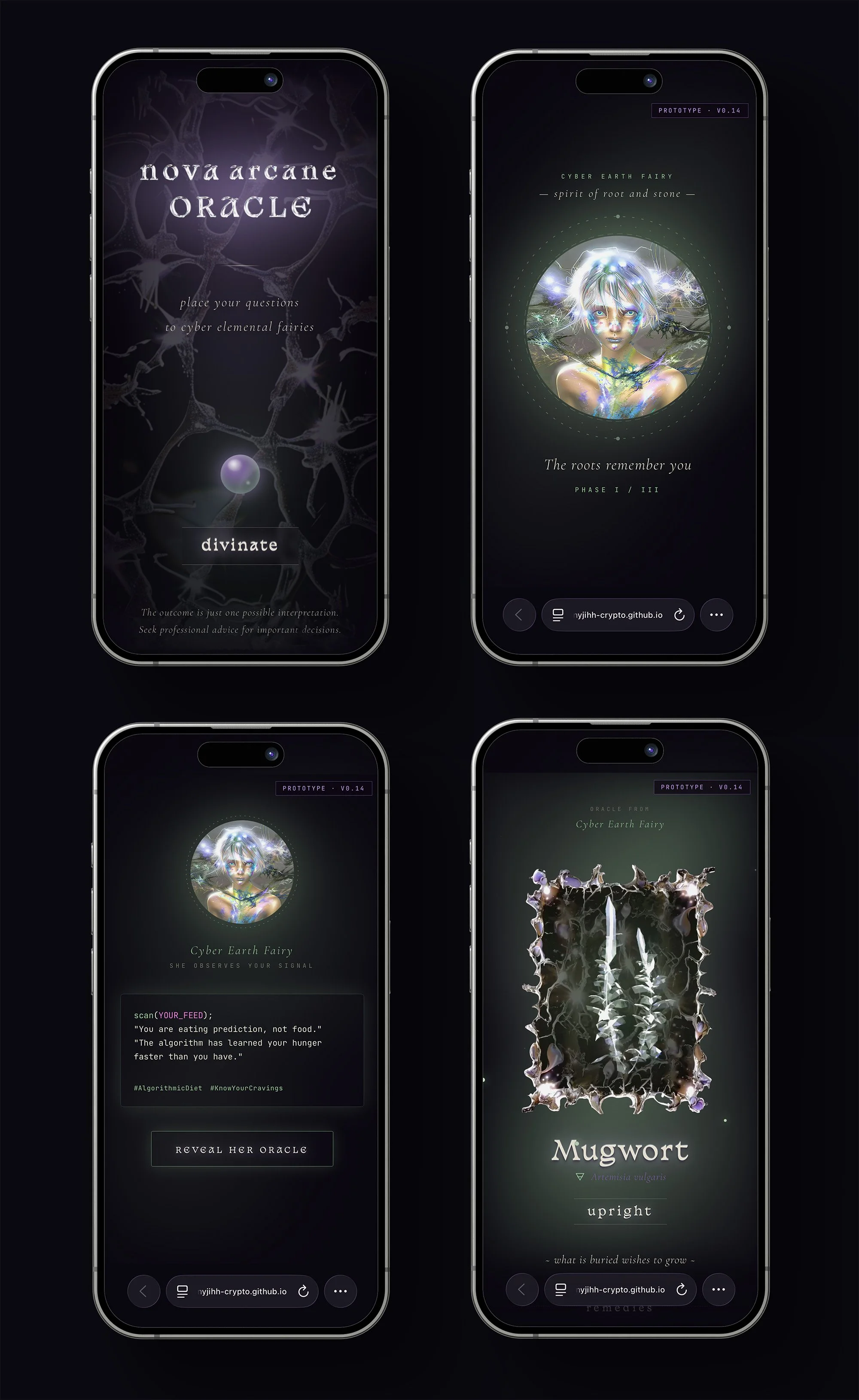
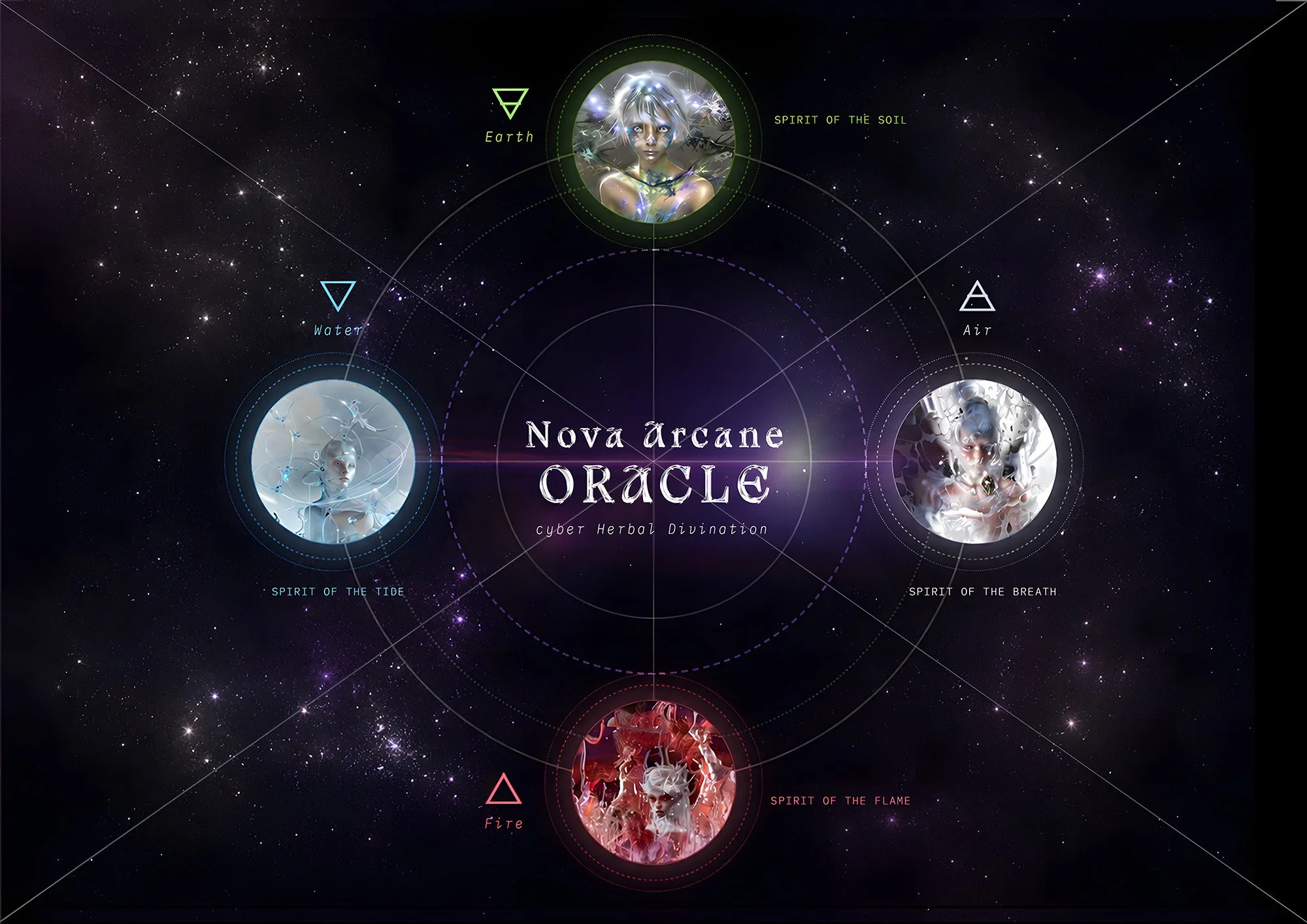
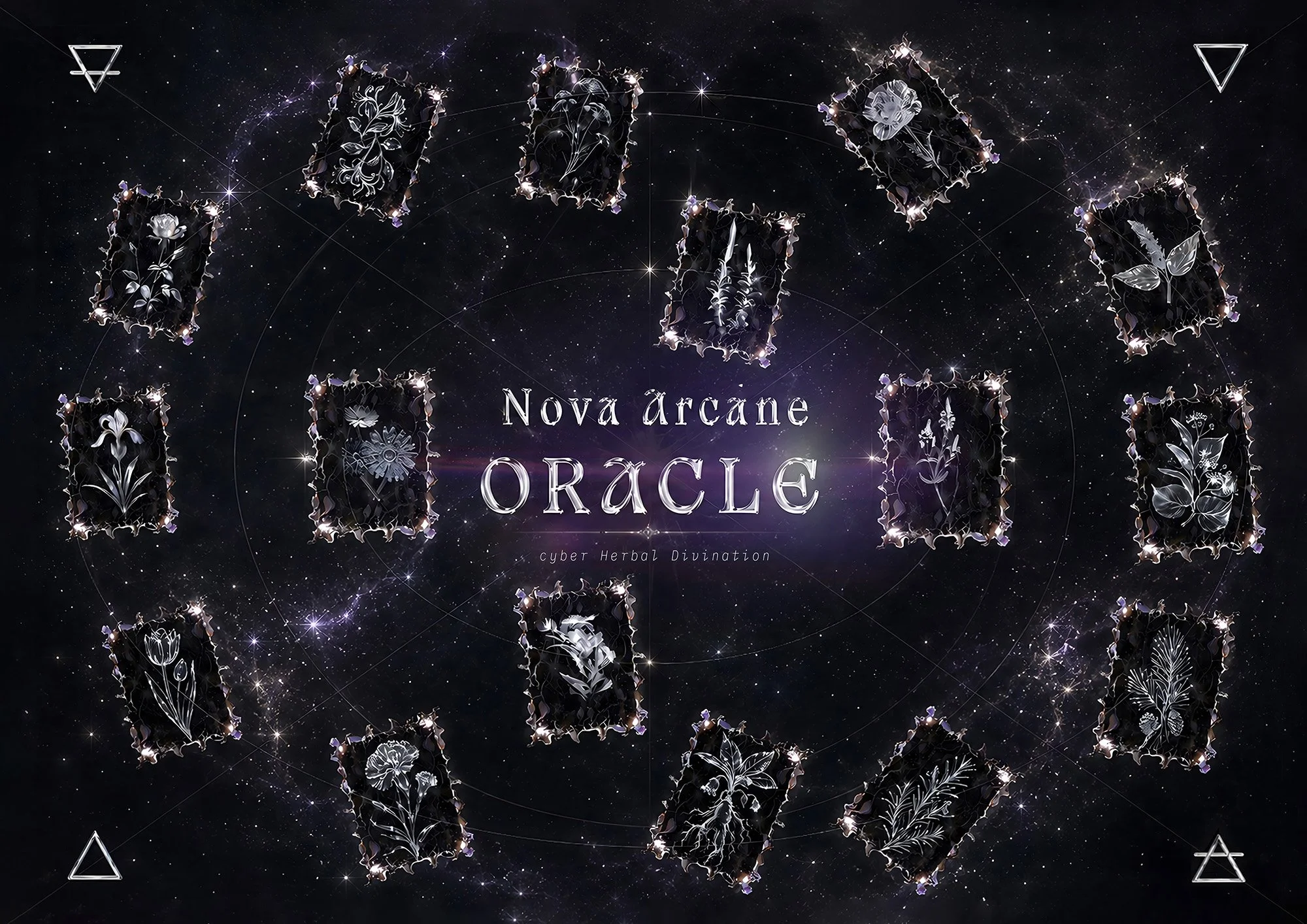
Nova Arcane Oracle is an interactive cyber-witchcraft work combining Taoist medicinal beliefs, Western herbal magic, and tarot divination, imagining a speculative divination system. The work presents four elemental cyber-fairies – earth, water, fire, and air – functioning as spiritual interfaces and guides and responding to questions emerging from contemporary digital life, offering code-poetry readings and herbal remedies. An accompanying set of NFC-embedded cards enables audience participation in the divinatory process. By drawing a card and accessing the interactive website via smartphone, participants receive personalised oracles from elemental fairies. Engaging with Donna Haraway’s cyborg figure and Nina Lykke’s notion of ‘third position’, the cyborg goddess, the work stages a space where technological systems and esoteric knowledge converge. It asks whether algorithmic randomness might open possibilities for care, healing, and re-enchantment in the digital age.
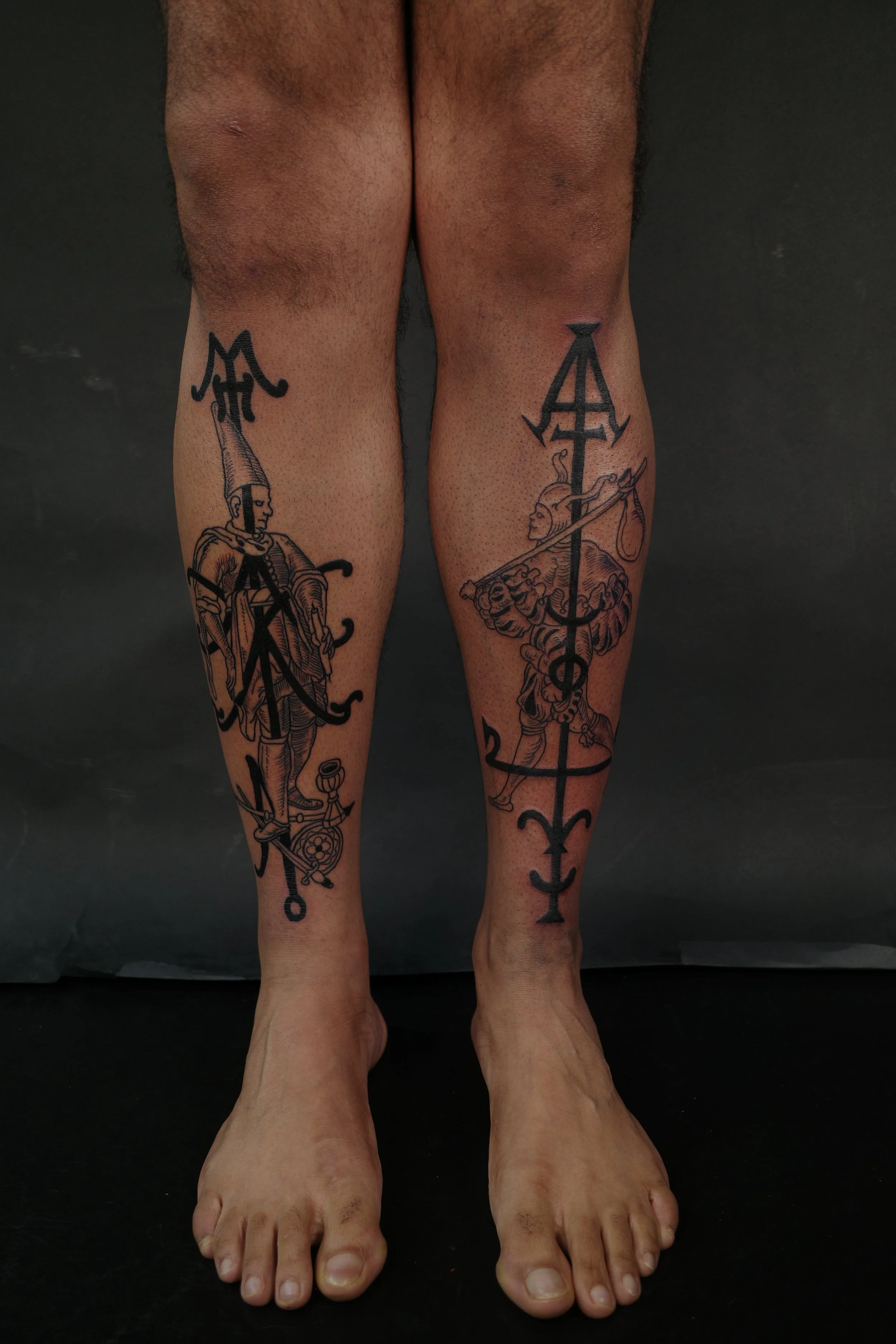
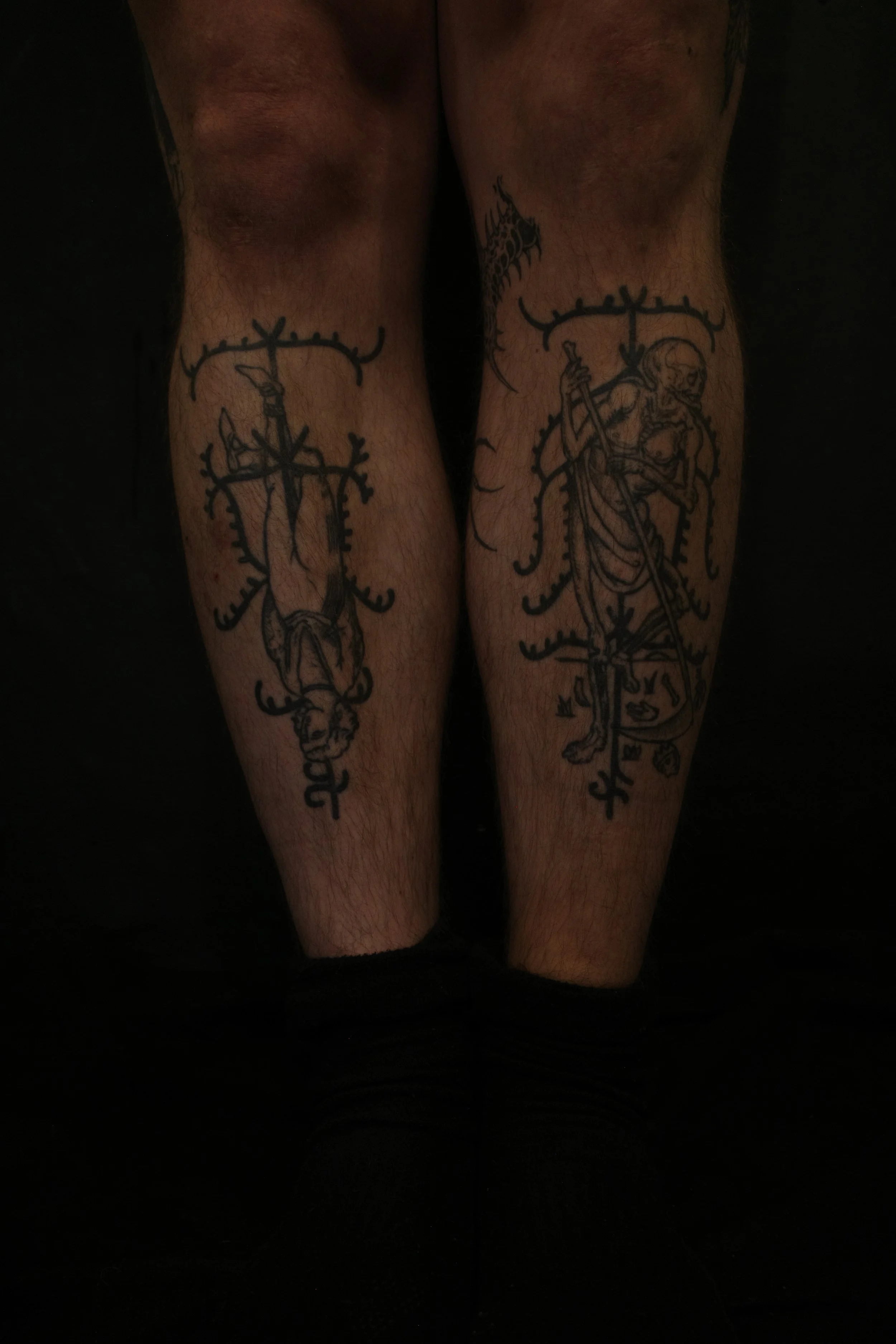
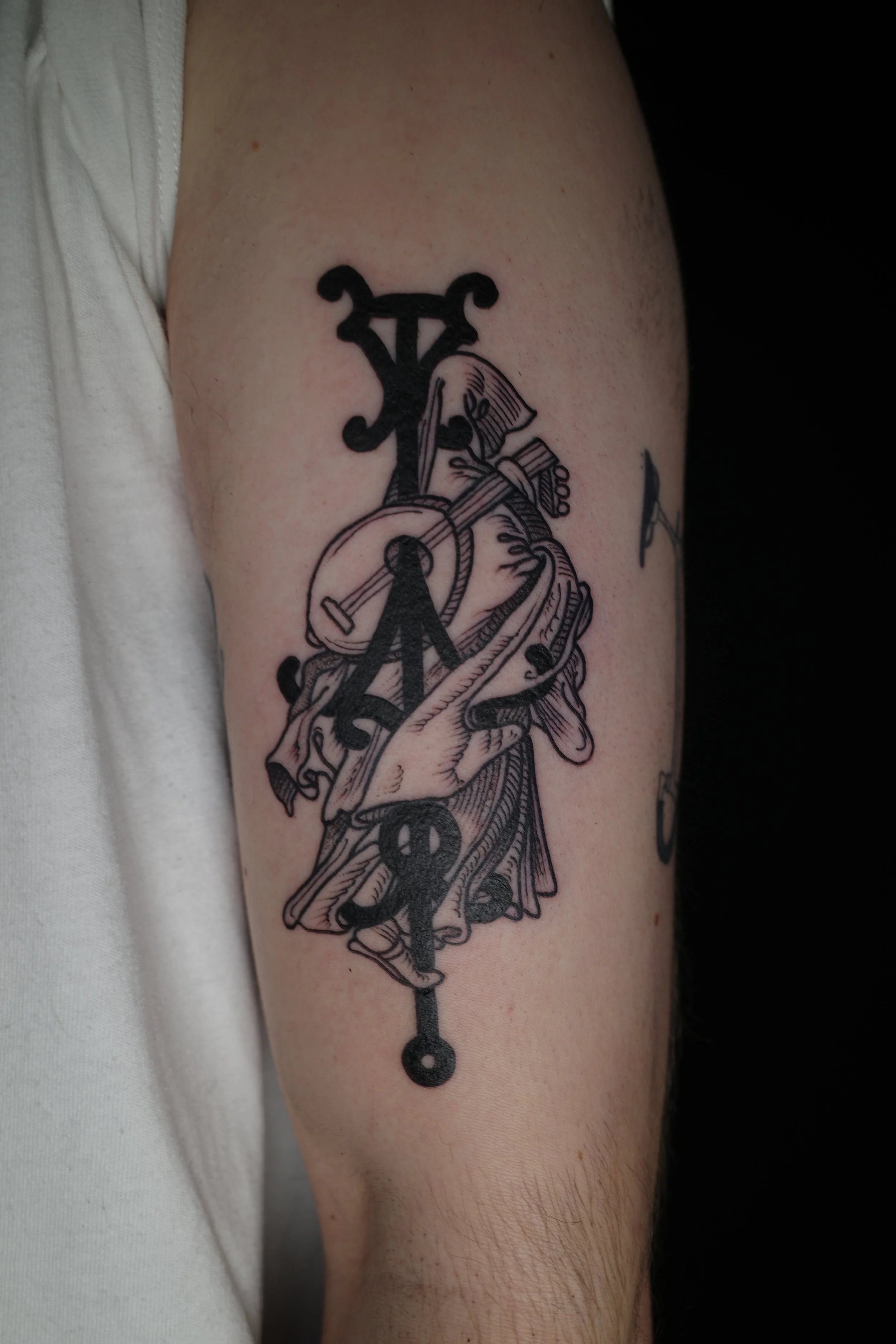
12. Ant The Elder, Skin rituals
Skin ritual marking, with accompanying sketch books, photographs, and documentary film The Hermit (date)
Aadam Tattoos / Skin ritual printed documentation (tattooed in 2025&2026, photographed in 2026)
A pair of tattoos representing The Magician (I) and The Fool (0) tarot cards, mixing classical elements found in the major arcana historical decks in an engraving style and personal sigils crafted for the specific intention of the piece and the wearer. Linking modernity with historical depth through symbolism, the tattoo practice itself and visual language.
Etienne Tattoos / Skin ritual printed documentation (tattooed in 2020, photographed in 2026)
A pair of tattoos representing The Hanged Man (XII) and The Death (XIII) tarot cards. Figurative elements intertwined with sigils to accentuate the intention behind those pieces for the wearer. They are seen here lived in a few years.
Sam Tattoo / Skin Ritual printed documentation (tattooed and photographed in 2026)
A take on a contemporary tarot card The Bard, celebrating music through engraving style illustration mixed in with a personal sigil.
Sketchbooks 1, 2, 3 Moleskine sketchbook, homemade oak gall ink based on a medieval recipe, pencil
Those sketchbooks are the bearer of the marks that appear within my private daily ritual practice. Post meditation, a tarot card or spread is pulled. This is the stimuli to craft a sigil, in a stream of consciousness way, appearing half way between automatic writing and automatic drawing. The sigils within those pages go onto informing my wider artistic and spiritual practice, being the based to a visual language I have been developing over the years, that exist through tattoos, artefacts and performance. They are ritual residues and ignitors of things to come.
The Hermit
© Ant The Elder
The Hermit Ritual documentation / video ( 9 minutes) The silence in between breaths is (im)permanent
The Hermit is looking for truth. The Hermit is isolated but receives visitors. To create a space where silence is grounding and breath is key to unlock the mark of (im)permanence, The Hermit is an experiential piece that invites the public to enter the temporary sanctuary, and foray into the inner sanctum. An exploration at the intersection of movement and stillness, the moment is set in flesh, the abstract breath is made analogue, the spirit is entering the tactile physical world. In isolation the Hermit allows for connection. The Hermit is an archetype found in many spiritual traditions. The number 9 card in the tarot represents the search for inner truth, spiritual insight, and the wisdom that can only be gained through solitude and introspection. The Hermit is not simply someone who withdraws from society, but one who does so with intention - to deepen their understanding of life, spirit, and self.
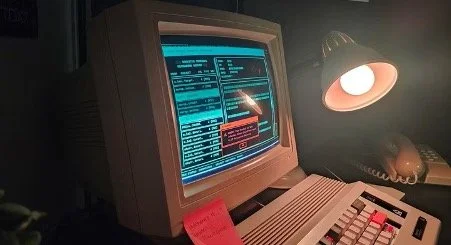
neoArcana (c) Mikey Damager
13. Mikey Damager, neoArcana (2025)
Installation
neoArcana is an interactive narrative system set within the offices of the fictional tech and philanthropy giant, The Bowditch Foundation. It centres on the exploits of a rogue, AI-Driven, Tarot-reading daemon who threatens to expose the occult secrets behind The Foundation’s latest Synthetic Reasoning technology.
Users explore a mixture of pre-written and generative elements by interacting with condemned computer terminal, printed documents, and a fully functional Tarot system based on the Smith-Waite deck.
neoArcana examines epistemic instability in a technocratic, post-truth landscape using AI as both a creative engine and an object of critique, framing divination as computation and narrative as mythopoeic infrastructure.
14. Lex Bluecairn, Miraculous Organ (2026)
Video and live performance (post-poned)
Do you ever feel unheard? Do you ever fear that no matter how loudly you speak, or even scream, no one hears you? Worry no more!
The Miraculous VoxLux Apparatus is the light that speaks for you. Join Lex Bluecairn, Inventor of the VoxLux, for an evening of Miracles. Before your eyes, sound will become light, and thought, action! Through the remarkable lumin-amplification of the VoxLux, you can change your name, you can become the person you always wanted to be, you can project music from your mind itself, you can hear the voices of the past and take hold of your own future. A night of comedy, song, Miracles, and exploration of the darkest aspects of human nature awaits.
The VoxLux Apparatus is a scenographic installation that explores the connection between sound and light, speech and agency, self and community. The tool itself is simple: a microphone that instantly transmits the rhythm and intensity of any sound into light, using entirely analogue means. Without a single line of coding, anything said, sung, or played into the microphone can be visualised as light. The lightbulb becomes a speaker, a queering of sensory binaries that draws attention to how our speech creates and recreates our reality. Speech is the first technology, and through advancement, has become a practice indistinguishable from magic - it can be used to harm, heal, or transform.
Safety warning: the VoxLux can be bright and flickering, and may not be suitable for those with photosensitive conditions. Even if not in any way photosensitive, please avoid staring directly at the bulb for too long. Eye protection such as sunglasses can mitigate risk, but does not remove risk entirely.
Content warning: This demonstration will include elements of participation, bright, flashing lights, discussion of heavy topics, and allusions to Shakespeare.
The live performance will take place at a later date. Please sign up for BADS to be informed.
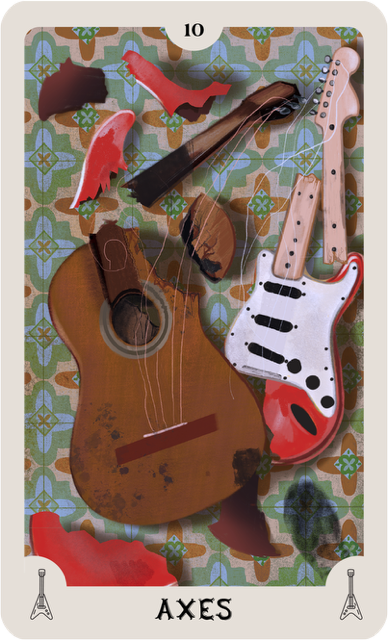
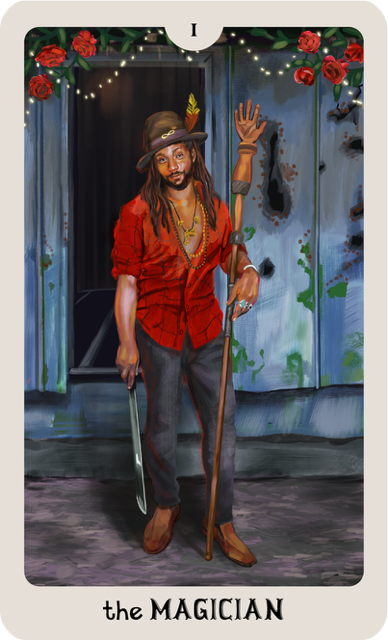
15. Stacey Williams-Ng, The Rhythm & Soul Tarot (2024)
Get That Rhythm & Soul! The Rhythm & Soul Tarot is an 80-card tarot based on the essential modern musical forms of America: jazz, blues, rock ‘n roll, and country music - each aligned with a corresponding element (fire, water, air, earth). The card system is based loosely on the Rider-Waite-Smith, first published in 1909. It contains 78 cards based on the classic tarot, with two bonus cards called Rhythm and Soul. The setting for this tarot’s story is the Southeast region of the United States, east of the Mississippi River, in the early to mid-20th century: the homeplace of the blues, soul, funk, rock ‘n roll, and so many more genres. Music is the language of these cards, and the Delta is their birthplace. It is also Stacey’s birthplace, and she made these cards to honour that legacy. This tarot tells the story of a human life through the lens and language of American music, using metaphors from the stories of this place and time to illuminate day-today troubles, joys, and conflicts. The illustrations, mismatched and honest and gritty, look like Southern folk paintings ought to. Some of these people are real, and some of them are made up, just like the stories you hear on porches down here in the Delta. When you read these tarot cards, it is Stacey’s hope that you listen to the corresponding songs that have been provided in the playlist, and allow their lyrics and harmonies to lend a deeper meaning into the spirit of the card you’ve drawn.
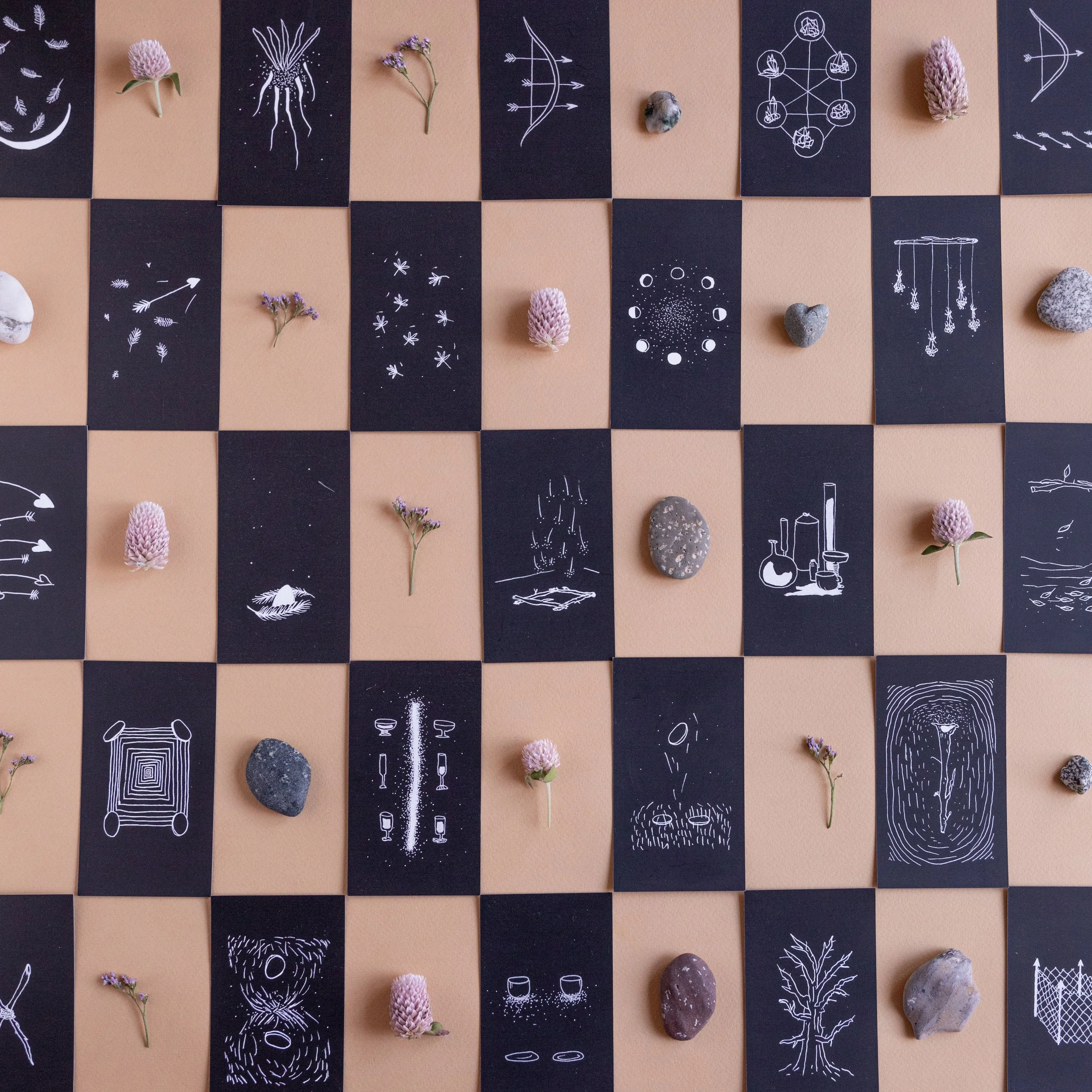
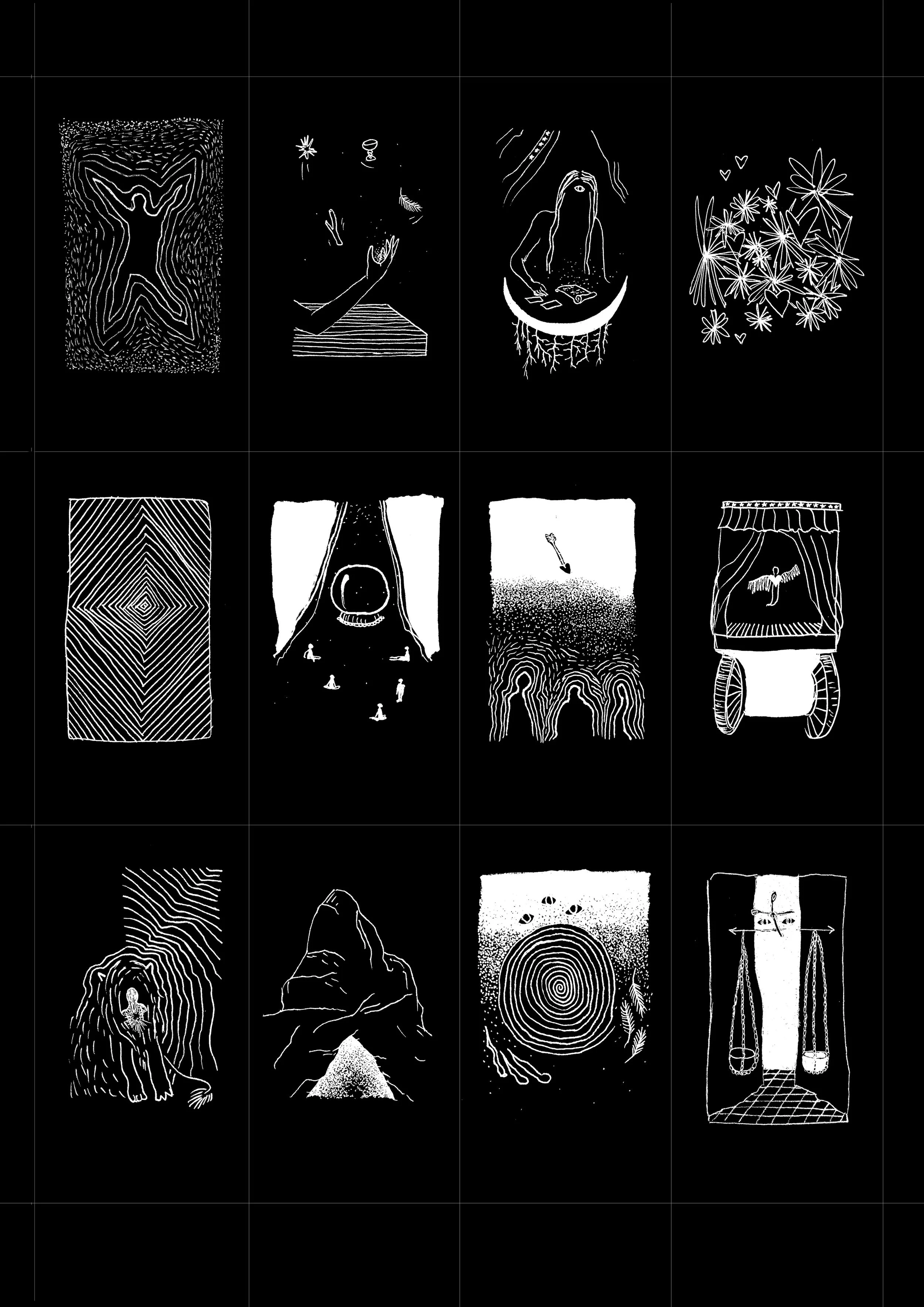
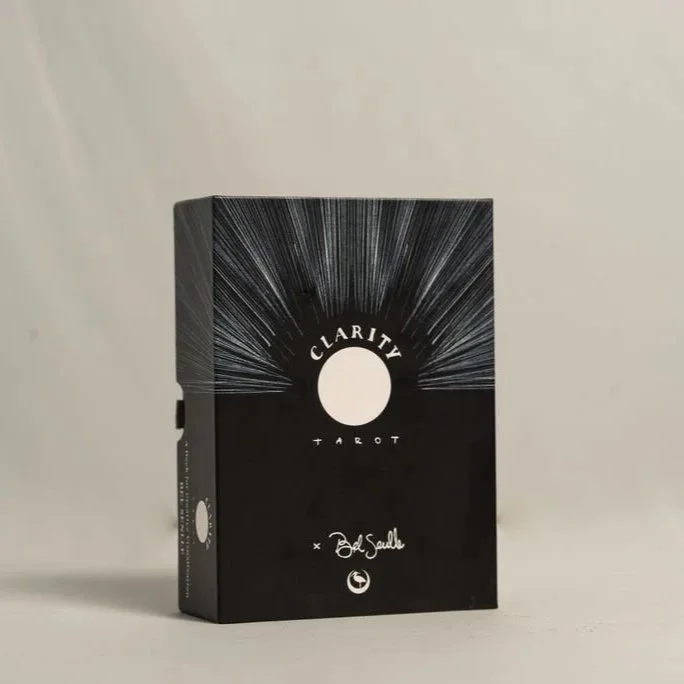
16. Bel Senlle, Clarity Tarot (2023)
Deck
Clarity Tarot reveals the heart of the traditional 78 imagery, stripped of monarchical hierarchy, binarism, and ageism, to allow any reader, beginner or expert, to access new visions, reflections and notions of power dynamics on personal and collective levels. Its Spanish edition has sold independently worldwide since 2019, whilst its English edition was published by Watkins in 2023 and distributed by Penguin Random House.
This deck will be displayed during the “Meet the Deck” event.
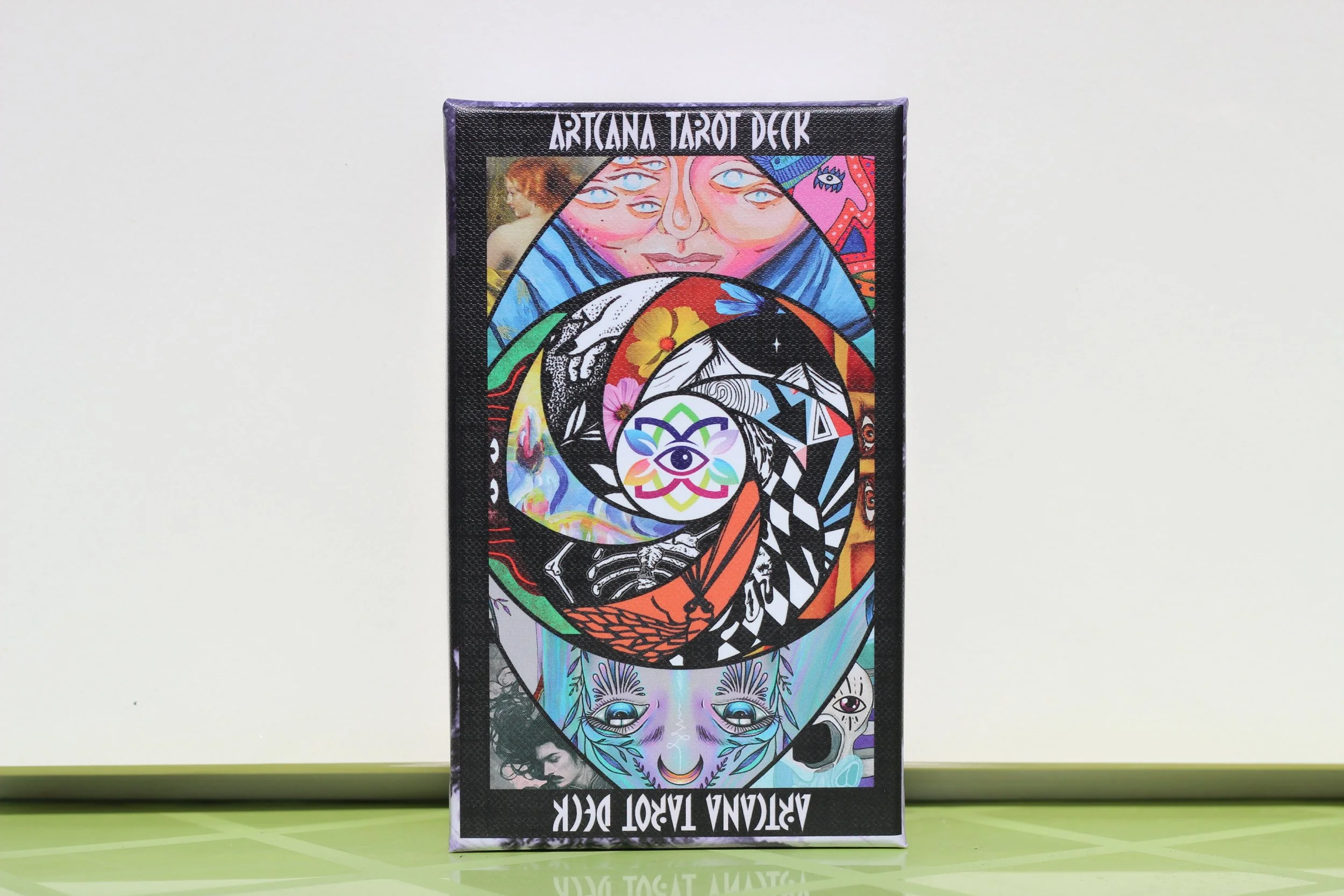
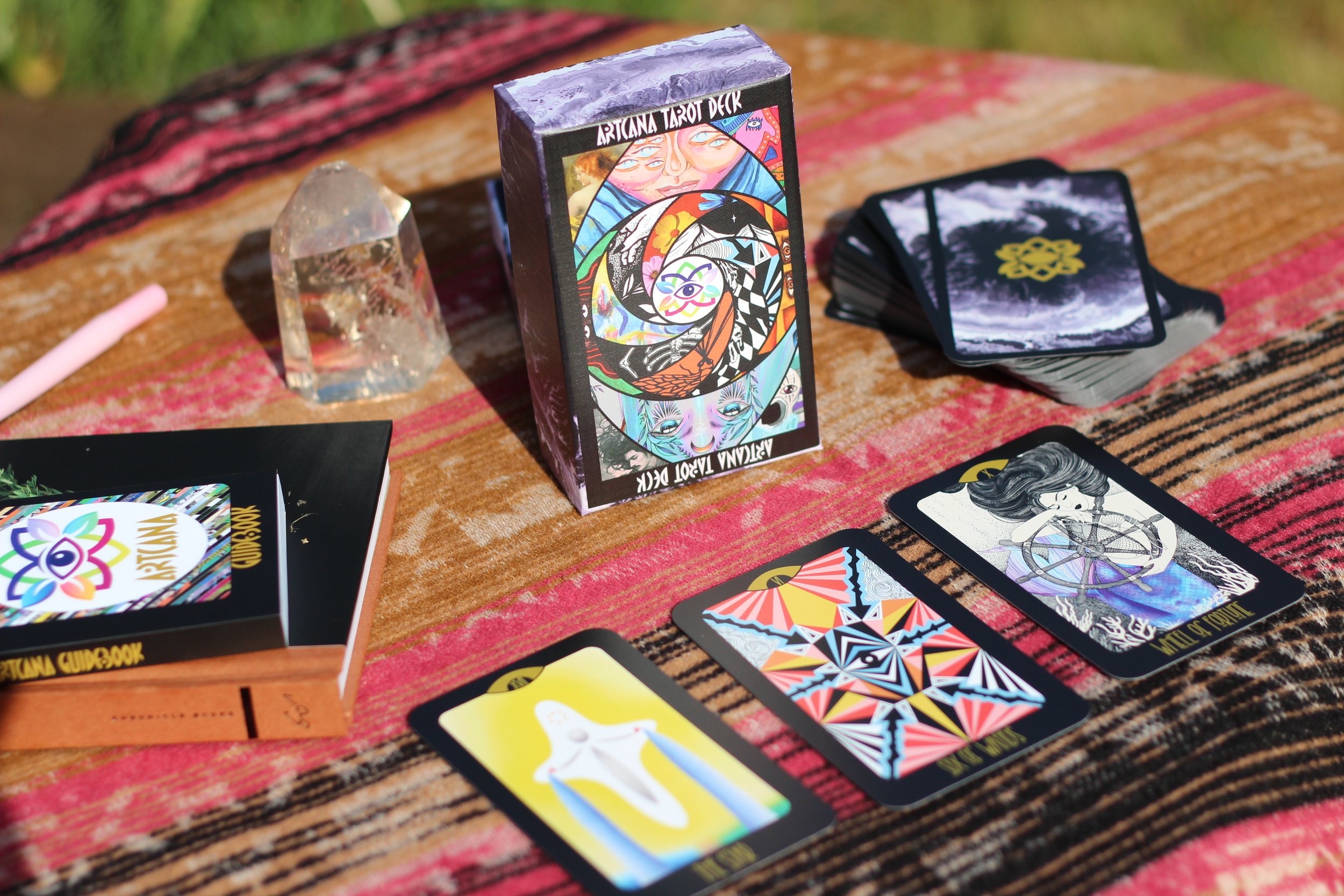
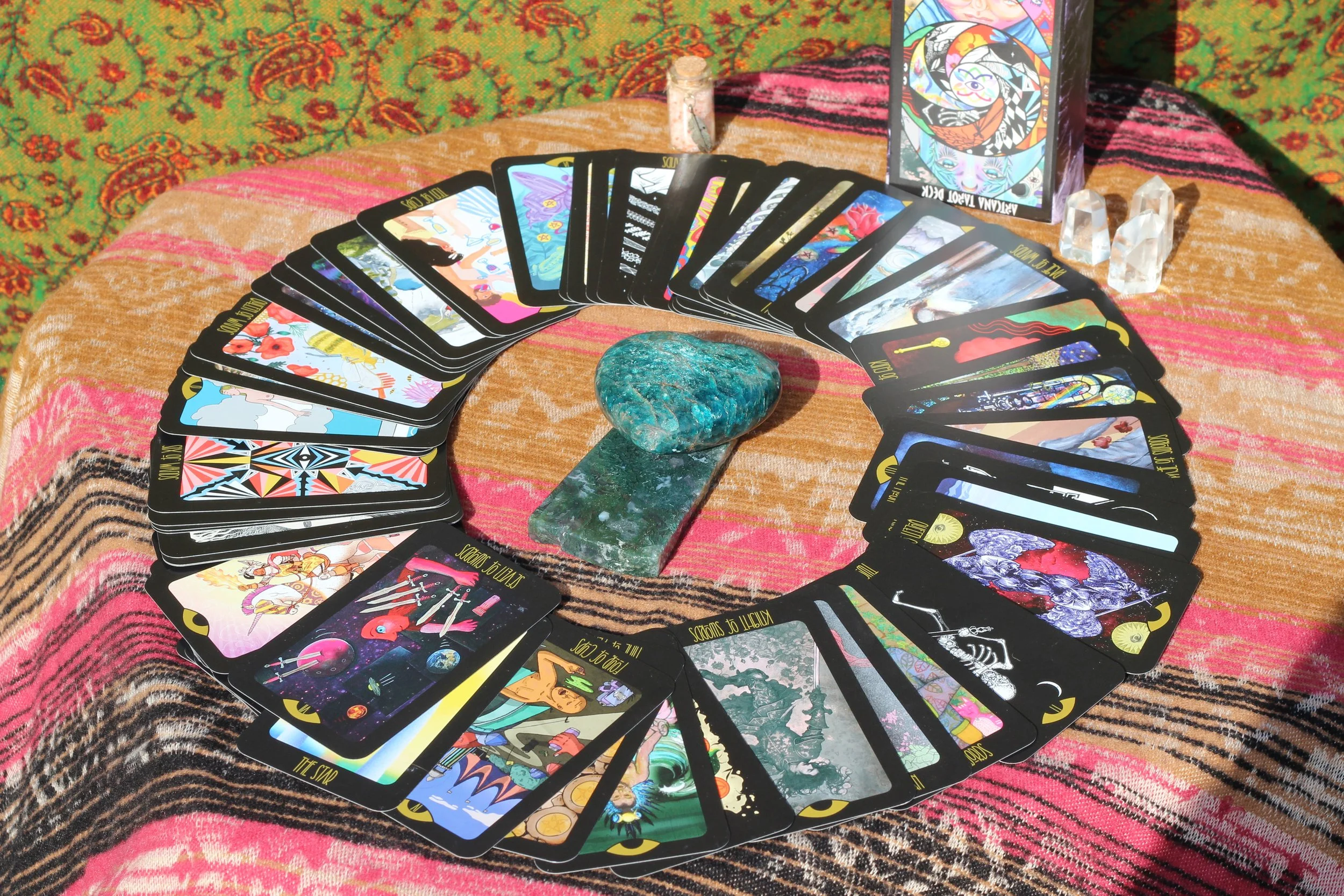
17. Jack Nunn, ARTCANA (2025)
Deck and Collaborative Tarot Reading
‘Connect with strangers and breathe as one as you grasp the lifeline of tarot itself. Your intention of learning about that next career step mingles with the collective anticipation of a shared reading, a shared moment. Initial awkward clumsiness distils to deep focus as the pendulum lifts and shudders over the tarot cards spread out like a map that you navigate as one.’
This unique take on a tarot reading invites collaboration, representing the collective authorship of the Artcana tarot deck. Participants are gathered as a group, introduced to the installation, and guided with a short breathing exercise to begin with. Utilising a shared presence meditation involving eye contact and physical movement, participants choose a string which is attached to a central pendulum device. Through collective stillness and micro-movements, the pendulum responds to the group, guiding the selection of three cards for a shared reading. The work frames tarot as a social technology: meaning emerges not from individual authority, but from collaboration, coincidence, and embodied connection.
This deck will be displayed during the “Meet the Deck” event.

18. Marcus Round, sent(i)ence (2025)
Deck and Immersive Performance Game
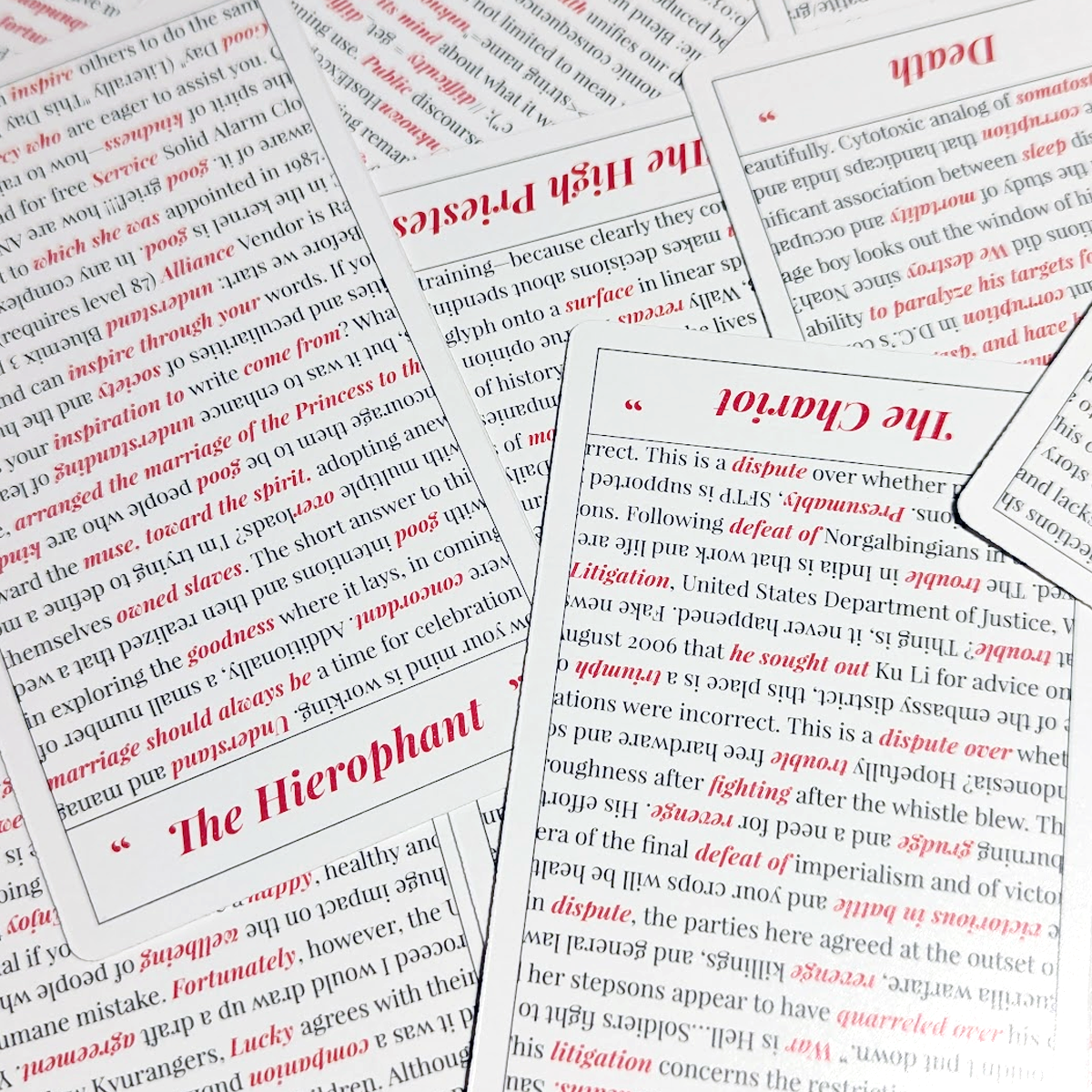
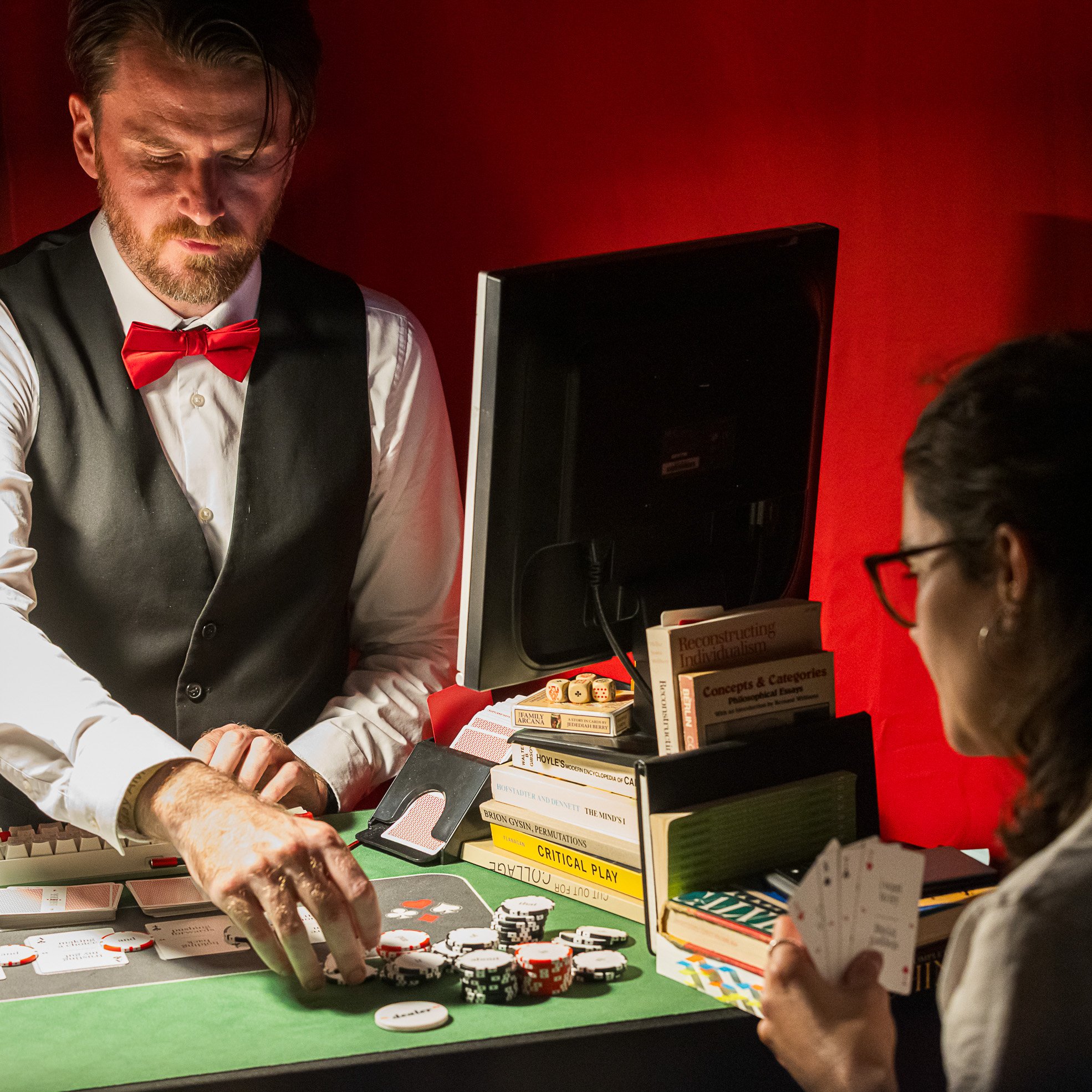
An absurd assemblage of poker, tarot, and AI invites participants to engage with questions of authorship, self-identity, and agency within language.
sent(i)ence originated from a question: how closely related are the ability to use language and the awareness of a self? When ChatGPT uses the word “I,” what does it mean?
This deck will be demonstrated during the “Meet the Deck” event.

19. Leon Clowes, The Alcoholic’s Tarot (2024)
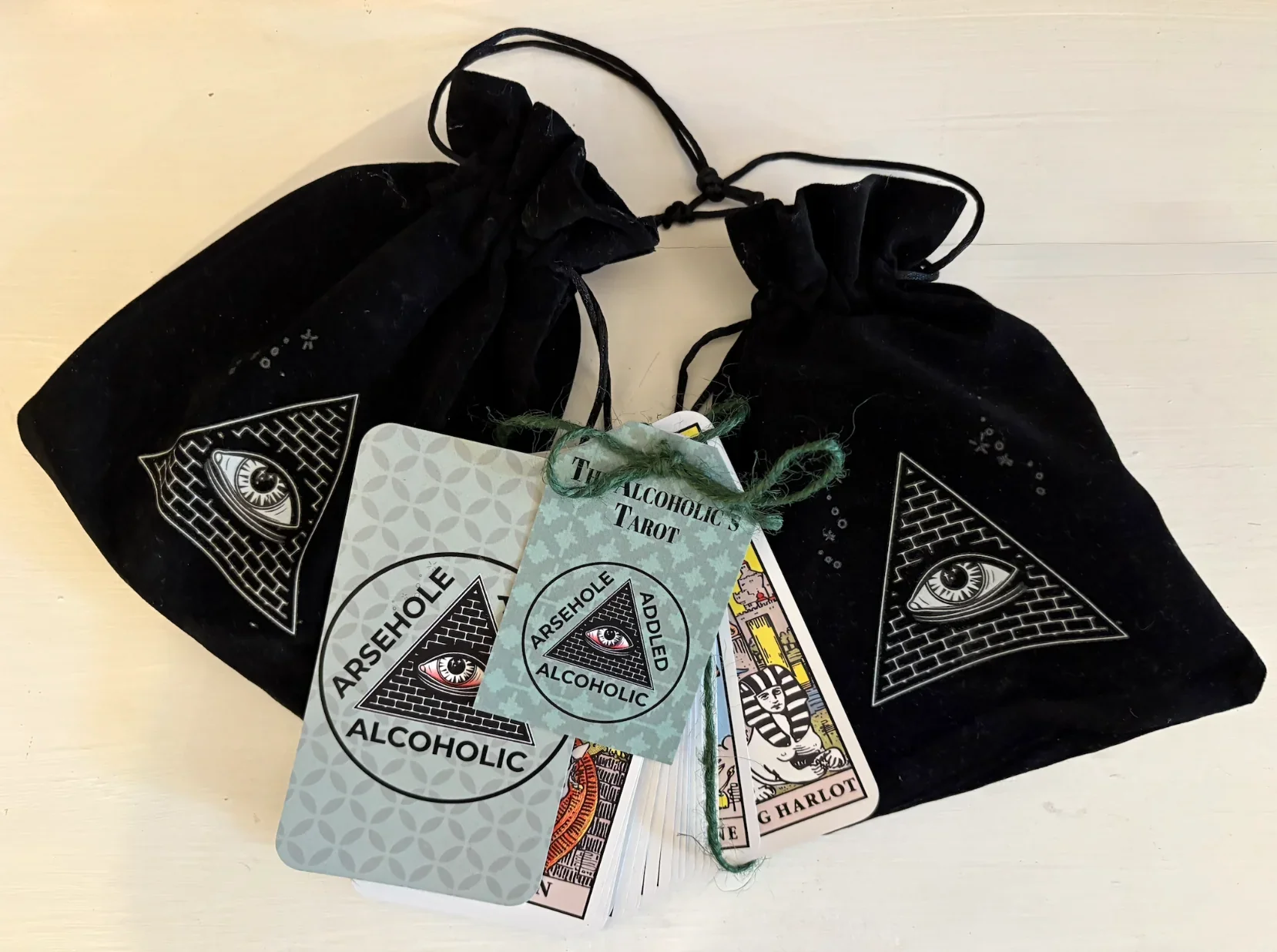
The Alcoholic’s Tarot is a bespoke deck developed collaboratively with over 100 participants (including people with lived experience of addiction and those without) across workshops, peer groups, and community settings.
Leon is an artist in addiction recovery himself and a self-taught tarot reader. He will be giving (firmly tongue-in-cheek) ‘alcoholic misfortune tellings’ to those who dare take part during the ‘Meet the Deck’ session.
This deck will be displayed during the “Meet the Deck” event.
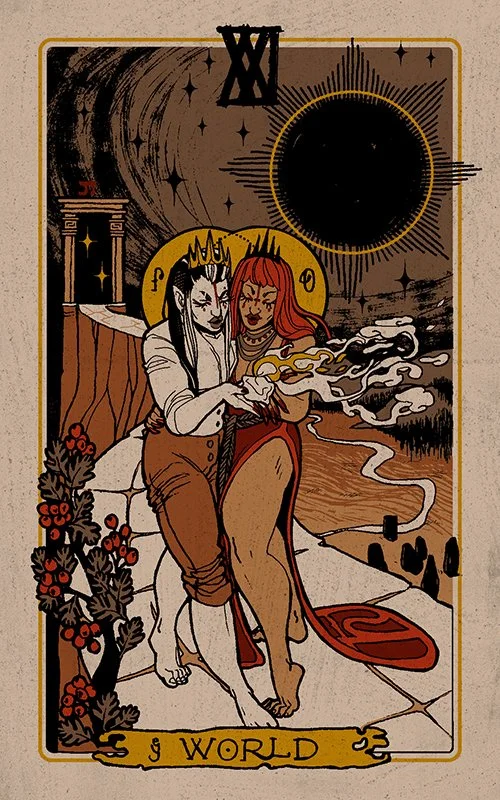
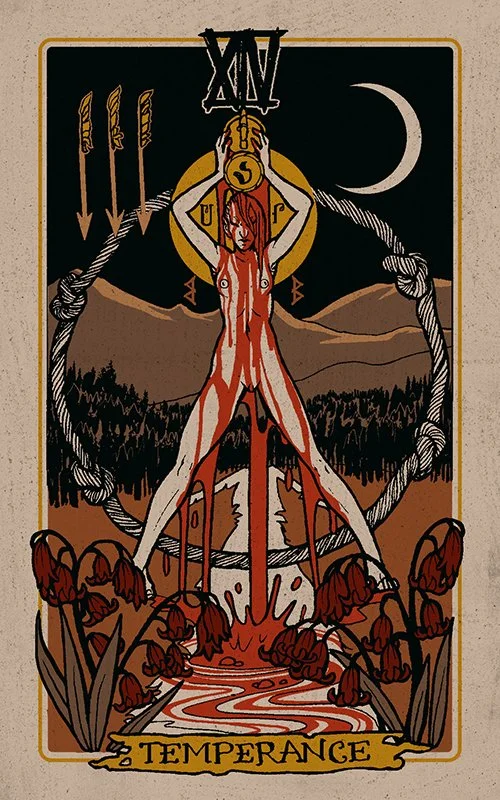
20. Lucian Margrave, THe Threshold tarot (2026)
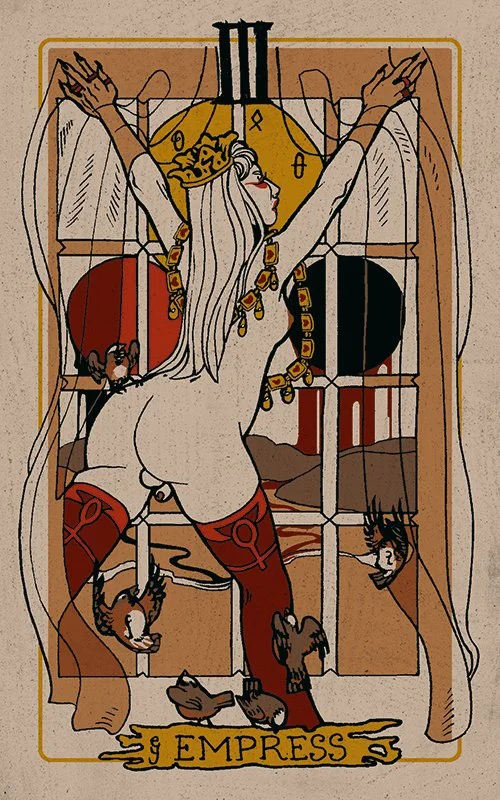
Queer-centric hand drawn tarot
The Threshold Tarot is Lucian’s fully-realised 78-card deck. It has been sort of half his life in the making from idea to result. The figures in it are real people that inhabit his internal world, and the symbolism has been worked out from the guiding principles of tarot as set out by Aleister Crowley in the Book of Thoth. The resultant deck is as fresh as a Spring morning. The symbolic language used within is informed by a lifetime of personal magickal and devotional practice. Lucian listened to a solid diet of Trepaneringsritualen, Lingua Ignota, Of The Wand And The Moon, Rich(ard) Dawson, The Body and Coil while he produced the deck, and this is evident in the resultant artwork. The deck feels earthy, dirty, touched by the divine madness of Dionysus, and is absolutely stuffed with queers.
A tarot deck had been on Lucian’s to-do list (and high on his “when will you do an [x]” request list) for over a decade, but it hadn’t yet been “the right time”. The “right time” came as a surprise at the end of 2019. Lucian was made redundant (which was tiresome), and his newfound freedom saw the production of the artwork for the Threshold Tarot recommencing in earnest. He explored again the world and people inside his spirit, and rooted himself in amongst them, laying out his own pain, understanding and healing in the cycle of the tarot. It is possibly his most personal, honest and fun work to date.
This deck will be displayed during the “Meet the Deck” event.
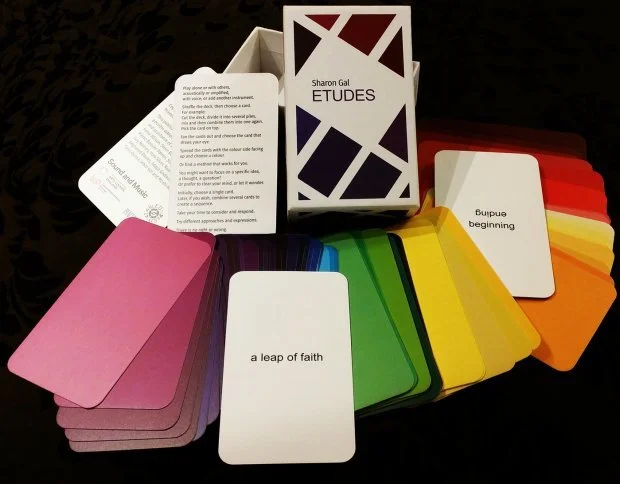
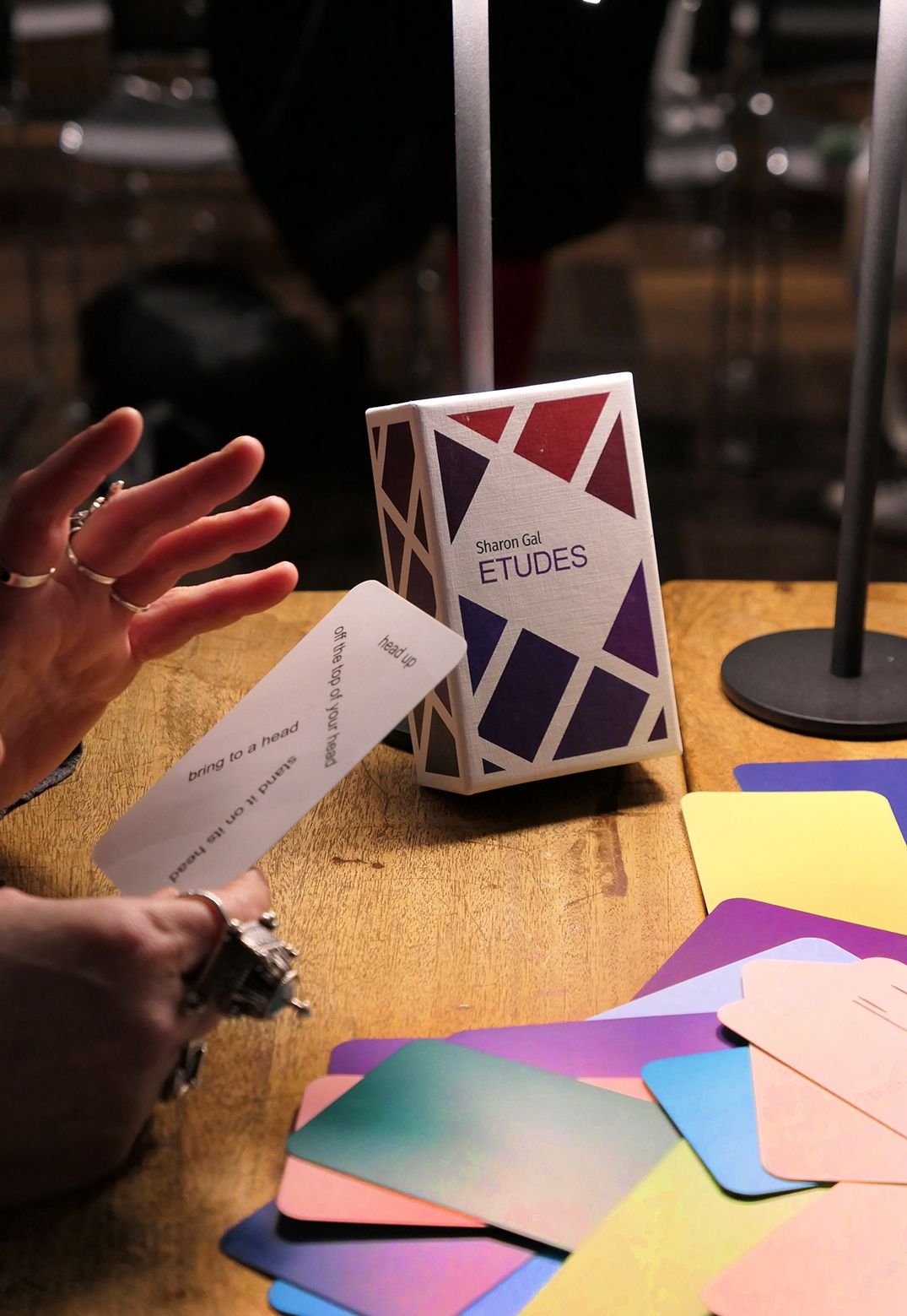
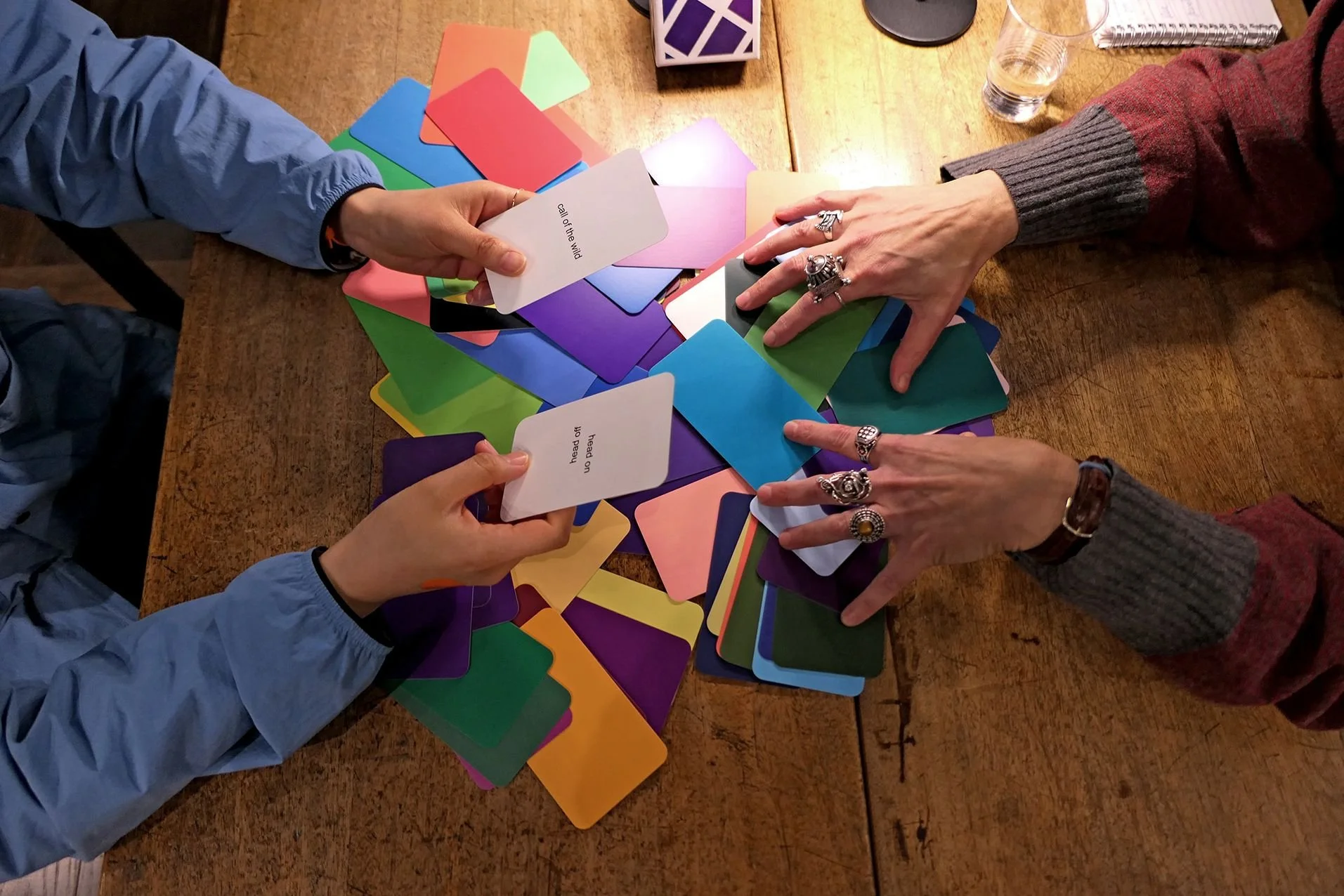
Sharon Gal, Études (2021)
Deck (not on display)
Études is a collection of scores and propositions, presented as a deck of 78 cards, with text on one side and colour on the other. A music, performance and a creative resource, the work acts as a catalyst to inspire and trigger the imagination. It’s an open score with interchangeable possibilities, to experience alone or with others.
Études is an invitation to play, engage, contemplate and explore; to enhance and expand one’s experience, thinking, practice and performance. It can be used as a set of instructions to be combined, or by drawing a single card from the pack. You can choose intuitively from any of the colors, or shuffle the cards to let chance influence the outcome.
While the Études were not designed to act as traditional Tarot, the deck is inspired by and follows the structure and form of the Tarot deck, with 5 families of color & text, relating to the major and minor arcanas and the 4 suits. This, however, is not an obvious relation and the idea and power of the Tarot is embedded within the energy and origin of The Étude deck to act as a resonance, responding to traces of distant divination tradition, while inviting new interpretations and occurrences.